

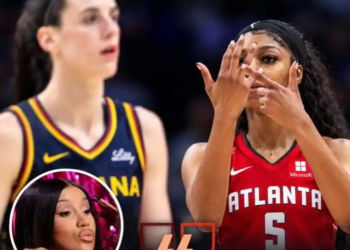
A viral social media graphic has sparked debate about WNBA viewership, claiming that Game 1 of the 2026 WNBA Finals recorded the worst ratings in league history. But the available numbers tell a very different story.
The championship opener between the Atlanta Dream and Golden State Valkyries averaged 2.1 million viewers across NBC and Peacock, according to figures announced by NBC Sports on October 21. The network reported that the audience made it the most-watched Game 1 in WNBA Finals history, up 11% from last year’s opener between the Las Vegas Aces and Phoenix Mercury.
That makes the graphic’s claim particularly misleading.
The discussion still raises an important question for Indiana Fever fans: How much does Caitlin Clark’s star power influence the WNBA’s television audience, and what does the league’s latest championship viewership say about its growing popularity?
THE NUMBERS BEHIND THE WNBA FINALS RATINGS CLAIM
The image uses dramatic language, but the published audience figures do not support its central assertion.
Game 1 took place on October 17, with Golden State defeating Atlanta 68–64 in a closely contested matchup. NBC Sports reported an average audience of 2.1 million viewers, with viewership peaking at 3 million during the closing stretch.
Those numbers represent a strong start for the championship series, not a historic low.
There is an important qualification when comparing ratings across different eras. The WNBA used a single-game championship format in its inaugural 1997 season before adopting a series format in 1998. That 1997 championship game averaged 2.85 million viewers, so historical comparisons depend partly on whether that one-game event is included.
Even with that distinction, describing the 2026 opener as the worst-rated Finals Game 1 is inconsistent with the available reporting.
Fans should be cautious about sharing viral graphics without checking whether the figures are accurate, which platforms were measured and what historical comparison is being made.
CAITLIN CLARK’S ABSENCE ADDS ANOTHER LAYER TO THE DEBATE
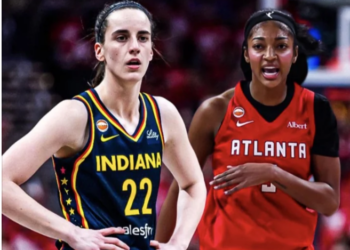
For Indiana Fever supporters, the ratings discussion naturally brings Clark into the conversation.
Clark has become one of the WNBA’s most recognizable players, and Indiana matchups featuring her have attracted substantial audiences during the 2026 season. The league’s own season review highlighted several major Fever broadcasts, including an August matchup against the Atlanta Dream that averaged 2.6 million viewers on ESPN.
That is a meaningful part of the broader discussion about the relationship between individual stars and television interest.
Clark’s appeal extends beyond her performances on the court. Her long-range shooting, passing ability and high-profile rivalries have helped draw attention to Indiana Fever games and the league more generally.
However, it would be an oversimplification to conclude that the WNBA’s entire television audience depends on one player.
The Finals feature different teams, different storylines and a different competitive atmosphere from the regular season. Viewership can also be influenced by the broadcast network, game time, competing sports events, marketing and whether a series produces compelling finishes.
The accurate conclusion is that Clark has demonstrated significant audience appeal—not that every game without her must struggle.
THE FINALS ARE PROVING THAT OTHER WNBA STORYLINES CAN DRAW ATTENTION
The Golden State Valkyries and Atlanta Dream entered the championship series with an opportunity to build their own national profiles.
Golden State’s 68–64 victory in Game 1 delivered a competitive opening, with Gabby Williams scoring 26 points to lead the Valkyries. The game attracted a peak audience of 3 million viewers near the finish, according to NBC Sports.
That performance matters because a growing league needs more than one successful team or one marquee player to sustain interest.
New rivalries, emerging stars and compelling postseason matchups give fans additional reasons to watch. A close Finals game can also introduce casual viewers to players and teams they may not have followed closely during the regular season.
For the WNBA, the challenge is turning those moments into lasting interest.
The league must continue promoting its stars, telling the stories behind its teams and making games accessible to fans across different platforms. Strong championship audiences are encouraging, but sustained growth will depend on how well the league builds on that interest.
WHY THE RATINGS ARGUMENT MATTERS TO THE INDIANA FEVER
The Fever’s influence on the WNBA conversation is impossible to ignore.
Indiana has become a major focus for fans interested in Clark, Aliyah Boston, Kelsey Mitchell and the team’s competitive future. Fever games have also contributed to the league’s larger conversation about ratings, marketing and the commercial value of its most recognizable players.
That makes the Finals audience an interesting comparison point, but it should not be used to dismiss the teams competing for the championship.
The Fever did not reach the Finals, while Atlanta and Golden State earned their places in the series. Their audiences deserve to be assessed using actual figures rather than assumptions about which players viewers would prefer to watch.
For Indiana, the bigger opportunity is to turn its popularity into sustained basketball success. Strong performances, postseason progress and meaningful rivalries would give the franchise additional opportunities to attract viewers.
If the Fever return to championship contention, the resulting matchups could become significant television events in their own right.
DOES THE WNBA NEED CAITLIN CLARK TO SUCCEED?
This is the question likely to generate the strongest reactions among fans.
Clark has helped bring substantial attention to women’s basketball, and her absence from a major game can reasonably become part of a discussion about audience composition. Yet the available Finals numbers do not support the argument that the championship becomes a ratings failure without her.
In fact, the 2.1 million average reported for Game 1 provides evidence that a Finals matchup without Clark can still attract a large national audience. The WNBA also reported record viewership across its 2026 regular season, with more than 90 million unique viewers across national networks.
Both points can be true: Clark is an important audience draw, and the league can attract viewers through other stars and compelling team storylines.
The more useful question is how the WNBA can build a broader audience without losing the momentum generated by its biggest names.
That requires investment in storytelling, competitive balance, broadcast accessibility and the promotion of players throughout the league.
WHAT THIS MEANS FOR THE WNBA’S FUTURE
The immediate lesson is simple: ratings discussions should begin with verified numbers.
Viral posts can generate attention by using dramatic headlines, but a claim that a game had the worst ratings ever should be backed by historical data. In this case, the published audience figure contradicts the graphic’s message.
The broader picture is more encouraging for the league. NBC Sports reported that its seven regular-season WNBA broadcasts averaged 1.8 million viewers, up 35% compared with comparable coverage last season. The Finals opener also exceeded the previous year’s Game 1 audience.
That does not mean the WNBA has no challenges. The league must continue turning casual interest into regular viewership and ensuring that attention remains strong beyond the biggest individual stars.
But it does mean that the claim of historically disastrous Finals ratings should not be accepted at face value.
FINAL VERDICT: THE VIRAL GRAPHIC MISSES THE MARK
The claim that Game 1 of the 2026 WNBA Finals recorded the worst ratings in league history is contradicted by the reported figures.
The Atlanta Dream–Golden State Valkyries opener averaged 2.1 million viewers on NBC and Peacock, making it the most-watched Finals Game 1 according to NBC Sports.
For Indiana Fever fans, the debate about Caitlin Clark’s influence on the WNBA remains worth discussing. Her ability to attract attention is a significant part of the league’s recent story, but it should be considered alongside the performances of other stars and the audience figures for games across the league.
The real story is not that the WNBA Finals suffered the worst ratings ever. It is that a viral graphic made that claim despite reported figures pointing in the opposite direction.







Discussion about this post