

The Philadelphia Phillies have made another important decision as they begin preparing for the 2027 MLB season, and this one could have consequences beyond their immediate roster plans.
Eight players around Major League Baseball received the qualifying offer this offseason, giving them the opportunity to accept a one-year contract worth $23.15 million or test free agency. Philadelphia, however, chose not to extend that offer to one of its longtime infielders, creating an interesting situation for the team’s offseason strategy.
The decision means the Phillies will not receive draft-pick compensation connected to that player’s departure. It also removes a potential financial and draft-related obstacle for teams interested in signing him.
For a franchise trying to remain competitive while managing an expensive roster, the move deserves closer attention.
PHILLIES TAKE A DIFFERENT APPROACH TO THE QUALIFYING OFFER
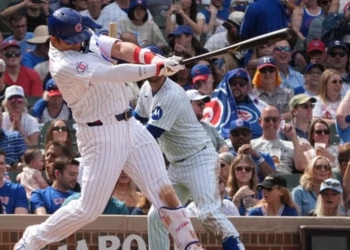
According to Phillies Nation, Philadelphia decided against extending a qualifying offer to Alec Bohm, who is entering free agency after seven seasons with the organization.
The qualifying offer is based on the average salary of MLB’s 125 highest-paid players. This year’s figure is $23.15 million.
Players who receive the offer can accept it and return to their previous team on a one-year contract. Alternatively, they can reject it and negotiate with other clubs.
When a player rejects the qualifying offer and signs elsewhere, his former team receives draft-pick compensation under MLB’s rules. The signing club may also face draft-pick or international bonus-pool penalties, depending on its financial and competitive circumstances.
Because Philadelphia did not extend the offer, that compensation arrangement will not apply to Bohm.
That could make him a more attractive option for teams looking for an experienced third baseman or first baseman without surrendering a draft pick.
WHY THE DECISION MATTERS FOR PHILADELPHIA
The immediate consequence is straightforward: the Phillies will not receive a compensatory selection in the 2027 MLB Draft if Bohm signs elsewhere.
Had Philadelphia extended the offer and Bohm rejected it before signing with another organization, the Phillies would have been eligible for compensation after the fourth round because of their luxury-tax status.
That is a meaningful consideration for a franchise that needs to keep developing affordable young talent.
The Phillies have invested heavily in established major league players, but maintaining a competitive roster also requires a reliable pipeline of prospects. Draft selections can become valuable contributors, trade assets, or future depth.
Losing a potential compensation opportunity is therefore something worth considering, even if the organization believes the qualifying offer was not the right financial decision.
Still, the decision should not automatically be interpreted as proof that Philadelphia has completely closed the door on a reunion. It simply means the team chose not to attach the qualifying-offer consequences to Bohm’s free agency.
EIGHT PLAYERS RECEIVED THE $23.15 MILLION OFFER
While Philadelphia passed on extending the offer, eight players around the league received it.
Among those reported recipients were three names who could interest the Phillies: Randy Arozarena, Seiya Suzuki, and Adrian Morejon.
Their qualifying-offer status adds another layer to Philadelphia’s offseason planning.
If the Phillies pursue players who rejected qualifying offers, the financial and draft implications could become important. As a luxury-tax-paying organization, Philadelphia must consider the additional penalties associated with signing certain free agents.
That does not mean the Phillies will avoid those players. It means any potential agreement would have to make sense in terms of both baseball value and the overall cost of adding talent.
The front office must balance immediate improvements with the longer-term consequences of its decisions.
BOHM’S PHILADELPHIA CAREER LEAVES A COMPLICATED LEGACY
Bohm’s departure from the qualifying-offer conversation comes after a seven-year run in Philadelphia.
The 30-year-old became an important part of the Phillies’ lineup after making his major league debut in 2020. He finished second in National League Rookie of the Year voting during that shortened season and earned an All-Star selection in 2024.
His greatest strength has often been his ability to drive in runs and make consistent contact.
However, the power production never developed to the level some expected. Bohm reached the 20-home-run mark only once and never finished a full season with an OPS above .800.
His 2026 campaign was another example of that inconsistency.
He struggled significantly during the early portion of the season before improving later. His strong performance in the Wild Card Series offered some encouragement, but his overall season OPS finished at .698.
Defensively, Bohm also experienced a transition. His work at third base improved after some difficult early seasons, and he adjusted reasonably well when the Phillies moved him to first base late in 2026.
Despite the uneven production, he remains a potentially useful free-agent option.
Phillies Nation noted that Bohm owns a career 101 OPS+ and an .853 OPS against left-handed pitching. Those numbers could appeal to teams looking for a right-handed hitter with experience and a track record of producing against lefties.
PHILLIES MUST THINK CAREFULLY ABOUT THEIR NEXT INFIELD MOVE
If Bohm’s time in Philadelphia is over, the organization will need to evaluate how best to distribute playing time around the infield.
The Phillies cannot simply replace his name on the roster without considering what he provided offensively and defensively.
His ability to drive in runs has been useful, even when his overall production has fallen short of expectations. Finding another player who can provide similar lineup value without demanding a major financial commitment will not necessarily be easy.
Philadelphia also has to consider the broader roster picture.
The organization is entering an offseason with multiple decisions to make, including how to improve its offense, address its outfield needs, and maintain enough pitching depth to compete in a demanding National League.
Every financial commitment matters when a team is already operating with a substantial payroll.
That makes the qualifying-offer decision part of a much bigger conversation about how the Phillies intend to build their next competitive roster.
PHILADELPHIA’S QUALIFYING-OFFER HISTORY PROVIDES IMPORTANT CONTEXT
The Phillies have used the qualifying offer several times since the system was introduced in 2012.
According to Phillies Nation, the organization has extended five qualifying offers during that period.
Jeremy Hellickson was the only player among those five to accept, returning to Philadelphia in 2016. J.T. Realmuto, Aaron Nola, and Kyle Schwarber rejected their offers but eventually re-signed with the Phillies.
Ranger Suárez followed a different path last offseason. He rejected the qualifying offer, signed with the Boston Red Sox, and generated draft-pick compensation for Philadelphia.
The Phillies used the resulting selection after the fourth round of the 2026 Draft to select pitcher Jaxon Jelkin at No. 135 overall.
That example demonstrates why qualifying offers can matter beyond the immediate free-agent negotiations.
They can give a club an additional opportunity to strengthen its farm system when an important player leaves.
This time, Philadelphia will not have that option connected to Bohm.
THE BIGGER QUESTION IS WHAT THE PHILLIES DO NEXT
The Phillies’ decision not to extend the qualifying offer is an important offseason development, but it is only one part of a much larger roster-building challenge.
The organization must decide where to spend, which positions require upgrades, and how much confidence it has in its younger players.
There is also the question of whether the Phillies will pursue any of the free agents who received qualifying offers. Players such as Arozarena, Suzuki, and Morejon could become relevant to their plans, but signing a player with qualifying-offer compensation attached would come with additional considerations.
For now, the clearest takeaway is that Philadelphia has chosen not to pursue draft-pick compensation connected to Bohm’s departure.
Whether that decision proves costly will depend on what the Phillies do with the roster spot, the money they save, and the opportunities they pursue during the rest of the offseason.
The 2027 draft may be months away, but Philadelphia’s decisions now could shape the organization’s future for years.



Discussion about this post