

The Philadelphia Phillies have reached another offseason with more questions than answers, and this time, the pressure to make significant changes is becoming increasingly difficult to ignore.
After another disappointing postseason exit, the Phillies must decide whether interim manager Don Mattingly deserves the opportunity to lead the team in 2027 or whether the organization needs a completely different voice in the dugout. However, focusing exclusively on the manager could distract Philadelphia from the bigger problems that contributed to its October disappointment.
The Phillies finished the regular season with 88 wins and secured their fifth consecutive postseason appearance. Yet their championship ambitions ended with a 6-2 loss to the Atlanta Braves in Game 3 of the National League Wild Card Series.
For a franchise built to compete for a World Series title, another early elimination raises uncomfortable questions about roster construction, bullpen depth, offensive consistency, and the decisions made by the front office.
Mattingly’s future is now part of that conversation. But if Philadelphia genuinely wants to turn regular-season success into a championship, the organization must determine whether its problems can be solved by changing managers or whether a more comprehensive roster overhaul is necessary.
ANOTHER POSTSEASON DISAPPOINTMENT PUTS THE PHILLIES UNDER PRESSURE
The Phillies entered the 2026 season expecting to compete deep into October. Instead, their postseason ended after three games against a familiar National League East rival.
The defeat was especially frustrating because Philadelphia demonstrated that it could recover from a disastrous start to the season.
After opening the campaign 9-19, the organization dismissed Rob Thomson and promoted Mattingly to interim manager. The move was intended to provide the struggling clubhouse with a fresh voice and a new direction.
The results improved considerably.
Under Mattingly, the Phillies went 79-55 in the regular season, helping the club recover from its early struggles and reach the playoffs for the fifth consecutive year.
That turnaround deserves recognition. Recovering from such a poor start requires more than a few fortunate results. The team needed improved execution, consistent contributions from its established players, and enough stability to remain competitive in a demanding division.
Nevertheless, the postseason exposed the difference between being a good regular-season team and being a genuine championship contender.
Philadelphia could overcome its early-season problems, but it could not overcome its shortcomings against Atlanta when the stakes were highest.
For the Phillies, the central question is no longer simply whether the team can reach October. It is whether the organization has assembled the right combination of talent, depth, and leadership to win once it gets there.
DON MATTINGLY’S FUTURE IS UNCERTAIN AFTER HIS IMPACTFUL INTERIM TENURE
Mattingly did not offer a definitive answer about his future after the Phillies’ elimination.
Speaking shortly after Atlanta completed its series victory, he emphasized that his personal situation was less important than the organization’s long-term success.
His position was understandable. The Phillies had just suffered another disappointing ending, and the immediate priority was evaluating what went wrong.
Mattingly also made it clear that he enjoyed his time in Philadelphia and remained interested in working in baseball.
His managerial record gives the organization a legitimate reason to consider retaining him.
Taking over a team that started 9-19 and guiding it to an 88-win finish is a significant accomplishment. His experience, calm communication style, and familiarity with the players also appear to have earned him respect inside the clubhouse.
Shortstop Trea Turner praised Mattingly for being approachable and honest, while catcher J.T. Realmuto expressed respect for him and a desire to see him return.
Those endorsements matter because a manager’s relationship with his players can influence clubhouse chemistry, accountability, and day-to-day performance.
However, positive relationships cannot be the only criteria in a decision of this magnitude.
The Phillies need a manager capable of navigating the postseason, managing a demanding pitching staff, making difficult in-game decisions, and holding an expensive veteran roster accountable.
Mattingly’s regular-season success strengthens his case. The playoff elimination, however, ensures that his performance will be examined closely.
The biggest question is whether Philadelphia believes Mattingly can take the next step with a better-supported roster or whether the organization wants a different managerial philosophy for 2027.
ALEX CORA REMAINS AN IMPORTANT NAME IN THE PHILLIES’ MANAGERIAL DISCUSSION
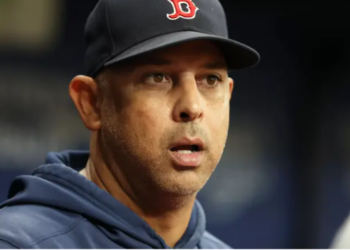
Before Mattingly took over, Phillies president of baseball operations Dave Dombrowski contacted Alex Cora about the managerial position.
The two previously worked together in Boston, where they won the 2018 World Series. That history made Cora a natural candidate when Philadelphia needed a new manager.
Cora declined at the time because he did not believe it was the right opportunity for him.
His name consequently became part of the broader discussion about Philadelphia’s managerial future.
A reunion would offer an experienced alternative to Mattingly, but hiring a familiar name would not automatically solve the Phillies’ problems.
A manager can improve communication, establish clearer expectations, and make more effective strategic decisions. However, even the most experienced leader cannot manufacture reliable relief pitchers, create additional starting-pitching depth, or guarantee that the offense will produce in October.
Philadelphia must also consider what a new manager would expect from the front office.
Would the next manager be satisfied with the existing roster, or would the candidate demand additional pitching depth and more flexibility on the bench?
Would the organization provide enough resources to support the manager’s preferred approach?
Those questions are just as important as identifying the person who occupies the dugout.
The Phillies should evaluate their options carefully rather than making a change simply because another postseason ended in disappointment.
THE BULLPEN PROBLEM COULD BE MORE IMPORTANT THAN THE MANAGERIAL DECISION
One of the most concerning aspects of Philadelphia’s 2026 campaign was its dependence on a limited group of trusted relief pitchers.
Entering the Wild Card Series, the Phillies had only two relievers they appeared comfortable relying on in high-pressure situations.
That lack of depth placed considerable pressure on the bullpen and limited the team’s flexibility when games became unpredictable.
Mattingly’s aggressive managerial approach was one factor in the discussion, but the construction of the relief corps also deserves scrutiny.
Managers can influence how frequently pitchers are used, when they enter games, and how long they remain on the mound. Those decisions can affect performance over a long season.
However, a thin bullpen creates difficult choices regardless of who manages the team.
When only a handful of relievers inspire confidence, those pitchers can accumulate heavy workloads. If a game becomes competitive early, the manager may have little choice but to use important bullpen arms before the team reaches the late innings.
The consequences can extend beyond a single game.
Fatigue may reduce effectiveness, consecutive appearances can limit availability, and the lack of dependable alternatives can make it harder to respond when an opponent begins threatening.
This is where Dombrowski’s offseason decisions become critical.
Philadelphia needs more than one or two reliable relievers. It needs a bullpen with enough depth to survive injuries, poor performances, and the unpredictable demands of a postseason series.
A new manager might change how the bullpen is used, but acquiring dependable relief pitching could have a much greater impact on the team’s championship prospects.
LATE-SEASON PITCHING DECISIONS EXPOSED A DEEPER ROSTER WEAKNESS
The Phillies’ problems were not limited to the bullpen.
Their starting rotation also faced a difficult stretch late in the regular season, when the organization wanted its strongest pitchers positioned for the postseason.
Instead, Philadelphia stumbled into a four-game losing streak and had to push its pitching staff to secure a playoff berth.
Aaron Nola pitched on short rest, while Zack Wheeler made a full start as the Phillies fought to claim the National League’s sixth postseason seed on the final day.
The effort helped the club reach October, but it also complicated the team’s preparation for Atlanta.
Ideally, a playoff-bound organization wants its leading starters rested and its rotation carefully arranged before a short series begins.
Philadelphia did not have that luxury.
In Game 3, Nola and Wheeler both surrendered significant home runs as Atlanta took control of the decisive contest.
It would be unfair to attribute those home runs entirely to fatigue. Pitching performance depends on numerous factors, including execution, opponent quality, pitch selection, and the circumstances of each at-bat.
Still, the difficult finish created a less favorable situation for Philadelphia than the organization would have wanted.
This is where rotation depth becomes essential.
A championship-caliber team needs enough dependable starting pitchers to absorb injuries, handle difficult stretches, and avoid overworking its most important arms simply to secure a postseason berth.
Philadelphia should examine whether its rotation has sufficient depth behind its established starters.
If the answer is no, adding another reliable starter or improving the organization’s reserve options should be a priority.
The goal is straightforward: reach October with the pitching staff prepared to compete rather than already having spent weeks operating under pressure.
BRYCE HARPER AND KYLE SCHWARBER CANNOT CARRY THE ENTIRE OFFENSE
The Phillies’ offensive limitations present another major concern.
According to the season assessment in the original report, only two regular players finished with an above-average OPS+ figure: Bryce Harper and Kyle Schwarber.
OPS+ measures a hitter’s on-base percentage and slugging percentage relative to league conditions, with adjustments for ballpark effects. A figure above 100 indicates above-average offensive production.
Having two productive offensive leaders is valuable, but a team pursuing a championship needs more consistent contributions throughout its lineup.
Opposing pitchers can approach a series differently when the offensive threat is concentrated in a small number of players.
They can carefully manage matchups, attack less productive hitters, and avoid giving the most dangerous bats favorable opportunities when possible.
Philadelphia must find ways to make its lineup more difficult to navigate.
Harper and Schwarber should remain important pieces of the team’s offensive identity. The solution is not necessarily to replace established stars who continue to produce.
Instead, the organization needs to improve the supporting cast.
That could involve identifying players who offer more consistent on-base production, adding a dependable contact hitter, improving the bench, or finding a better balance between power and situational hitting.
The Phillies should also examine whether their lineup has enough flexibility to respond when opposing teams neutralize their primary power threats.
A championship offense does not need every player to become an All-Star. It does, however, need enough credible threats that opponents cannot focus their entire pitching strategy on two hitters.
ALEX BOHM, EDMUNDO SOSA AND OTHER ROSTER DECISIONS COULD SHAPE 2027
Philadelphia faces several personnel decisions as it prepares for the offseason.
According to the supplied report, Alec Bohm, Edmundo Sosa, José Alvarado, Luis Arraez, and Tim Mayza are among the players approaching free agency.
Their situations give the Phillies opportunities to reshape the roster, although each decision must be evaluated individually.
Bohm and Sosa have provided infield options, while Alvarado has been part of the pitching staff. Arraez arrived in a trade-deadline move but struggled and missed the postseason because of a sprained ankle. Mayza, meanwhile, delivered a solid season after returning on a minor-league deal.
The organization must determine which contributions are worth preserving and where different personnel could provide greater value.
That does not mean Philadelphia should automatically let every expiring contract go.
Roster decisions should account for performance, positional needs, defensive value, projected cost, and the availability of suitable replacements.
A player who appears replaceable in isolation may become difficult to replace if several other departures occur at the same position.
The Phillies must also avoid confusing activity with improvement.
Signing multiple players does not guarantee a better team. What matters is whether the new additions address the specific weaknesses that became apparent during the season.
The most productive offseason would combine targeted acquisitions with a clear understanding of how the existing roster fits together.
BRYCE HARPER’S COMMENTS HINT AT A POTENTIALLY DIFFERENT-LOOKING TEAM
Harper acknowledged that he expects the Phillies to look considerably different next season.
That statement is significant because it reflects the possibility of meaningful roster changes after another postseason disappointment.
However, a different-looking roster does not necessarily mean a complete rebuild.
Philadelphia has invested heavily in established veterans, leaving the front office with financial commitments that could limit its flexibility.
Those contracts do not prevent the Phillies from improving. They simply make the process more complicated.
The organization may need to prioritize affordable players who address specific weaknesses rather than pursue expensive acquisitions at every position.
It must also consider the value of continuity.
A team that has reached the postseason five consecutive times already possesses a foundation capable of producing regular-season success. Replacing too many players without a clear plan could disrupt that foundation without guaranteeing better results.
The challenge is finding the right balance.
Philadelphia should preserve the strengths that have kept it competitive while making deliberate changes to the areas that repeatedly undermine its postseason ambitions.
That approach would allow the club to pursue a championship without unnecessarily discarding the core of its roster.
DAVE DOMBROWSKI MUST ANSWER FOR THE ROSTER, NOT JUST THE MANAGER
It would be easy for the Phillies to make Mattingly’s future the defining story of the offseason.
A managerial change offers a visible response to disappointing results. It creates a new narrative, gives the organization an opportunity to reset expectations, and can temporarily restore optimism among supporters.
But it does not automatically address the underlying weaknesses.
Dombrowski and the front office must examine the decisions that left Philadelphia short of dependable bullpen options and exposed its lack of pitching depth late in the season.
They must also consider why so few regular hitters produced above-average offensive numbers and whether the existing roster has enough flexibility to respond to different postseason matchups.
Those questions require an honest evaluation of personnel decisions, not simply a change in leadership.
If Mattingly is replaced but the Phillies enter 2027 with the same structural weaknesses, the organization could find itself facing familiar problems again.
Conversely, retaining Mattingly while improving the bullpen, strengthening the rotation, and adding offensive depth could provide a path forward.
Neither scenario guarantees success.
The important distinction is whether Philadelphia treats the managerial decision as one component of a broader improvement plan or as a substitute for addressing the roster.
For a franchise with championship ambitions, the latter would be a serious mistake.
THREE POSSIBLE PATHS FOR THE PHILLIES IN 2027
The Phillies have several potential directions available as they prepare for next season.
SCENARIO ONE: MATTINGLY RETURNS WITH A STRONGER ROSTER
Retaining Mattingly would reward the turnaround he produced after taking over during the team’s disastrous opening stretch.
It would also preserve continuity in the clubhouse and give the organization an opportunity to determine what he could accomplish with a deeper pitching staff.
Under this scenario, the front office would focus on improving the bullpen, adding rotation insurance, and making targeted offensive upgrades.
The major advantage would be avoiding unnecessary disruption while addressing weaknesses that were not entirely within the manager’s control.
The risk is that Philadelphia could retain a leadership structure that the organization ultimately believes needs to change.
SCENARIO TWO: THE PHILLIES HIRE A NEW MANAGER
Philadelphia could decide that the team needs a permanent managerial appointment and pursue an experienced candidate.
Cora’s previous connection with Dombrowski makes him a natural name to consider, although his availability and willingness to accept the job would need to be established.
A new manager could introduce different strategies, establish new expectations, and provide a fresh start.
However, the organization would need to ensure that its next hire receives the personnel necessary to implement those plans.
Otherwise, the Phillies could change the person making the decisions without changing the circumstances that made those decisions so difficult.
SCENARIO THREE: A BROADER ROSTER SHAKE-UP
The third possibility is a more substantial effort to reshape the supporting cast around Philadelphia’s established stars.
That could include changes to the bullpen, additional rotation depth, adjustments to the infield, and a stronger bench.
Such a strategy would require careful financial planning because the club already has significant commitments to veteran players.
The potential reward is a roster with fewer obvious weaknesses and more ways to respond when injuries or difficult matchups arise.
The danger is making unnecessary changes simply to demonstrate that the organization is taking action.
Of the three approaches, the most important ingredient is not the number of players or coaches who depart. It is whether the organization identifies its actual weaknesses and makes decisions designed to correct them.
WHAT THIS MEANS FOR THE PHILLIES’ WORLD SERIES AMBITIONS
The Phillies have demonstrated that they can compete over a full regular season.
Their fifth consecutive postseason appearance reflects a sustained level of competitiveness that many organizations struggle to achieve.
But consecutive playoff appearances are not the ultimate objective for a franchise pursuing a championship.
The postseason places a different set of demands on a team.
Starting pitchers must be prepared for difficult matchups. Relief pitchers must be available when games become tense. Hitters must capitalize on scoring opportunities, and managers need enough roster flexibility to react to changing circumstances.
Philadelphia’s elimination highlighted how quickly weaknesses can become decisive in a short series.
The Braves did not need to expose every problem in the Phillies’ roster. They needed to exploit enough of them to win the series.
That is why offseason depth matters so much.
A more reliable bullpen could help Philadelphia protect narrow leads. Additional starting-pitching options could reduce the pressure on its top arms. More productive hitters throughout the lineup could prevent opposing teams from concentrating on Harper and Schwarber.
Those improvements would not guarantee a World Series title, but they would give the Phillies more ways to compete when the margin for error becomes smaller.
The organization now has an opportunity to use the disappointment constructively.
Whether Mattingly remains in charge or a new manager takes over, the objective should be the same: build a roster that is better equipped to handle the demands of October.
FINAL VERDICT: DON MATTINGLY IS PART OF THE QUESTION, BUT HE IS NOT THE WHOLE ANSWER
Don Mattingly’s future will be one of the Phillies’ most closely watched offseason decisions.
His record after replacing Thomson demonstrates that he helped stabilize a struggling team and guide it back into the postseason conversation. The respect expressed by players such as Turner and Realmuto also suggests that he established positive relationships within the clubhouse.
Nevertheless, another early playoff exit makes an evaluation unavoidable.
The Phillies must decide whether Mattingly is the right person to lead the team in 2027, whether a different manager could improve its postseason performance, and what kind of roster that manager would need.
But the bigger issue extends beyond the dugout.
Philadelphia needs more dependable relief pitching, greater protection for its starting rotation, and more consistent offensive production from the players surrounding its leading stars.
Dombrowski’s offseason decisions will be central to addressing those concerns.
My prediction is that the Phillies will explore their managerial options while placing significant emphasis on strengthening the roster around their established core. A different manager remains a possibility, but a coaching change alone would be an incomplete response to the problems exposed by the 2026 season.
The Phillies do not need to abandon everything that has made them competitive. They need to identify why their regular-season success has not translated into the postseason results they want and make targeted improvements.
For Philadelphia fans, the defining question this offseason is not simply whether Don Mattingly stays or goes.
It is whether the organization can finally turn another painful October ending into a plan that gives this team a better chance of competing for the World Series in 2027.



Discussion about this post