

Elle Duncan has delivered a powerful message about the growing toxicity surrounding WNBA coverage, warning that cultural and political battles are overshadowing the basketball itself. Her comments arrive as the Indiana Fever, Caitlin Clark, and other prominent figures in women’s basketball continue to attract intense scrutiny both on and off the court.
The WNBA’s rise in popularity should be a reason to celebrate its athletes, competitive rivalries, and growing influence in professional sports. Instead, broadcaster Elle Duncan believes that too much of the conversation has been consumed by controversy, online hostility, and arguments that have little to do with what happens during games.
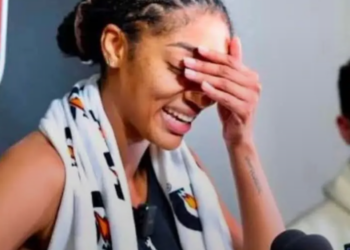
Speaking at the Front Office Sports Tuned In Summit on October 13, 2026, Duncan reiterated her frustration with the environment surrounding the league, describing WNBA coverage as “toxic as hell.”
She also condemned the tendency to reduce the league to a culture war, calling that development disgusting. Her remarks focused on the treatment of Black and queer women, whom she believes are frequently targeted by people looking to turn basketball into a vehicle for broader political and cultural arguments.
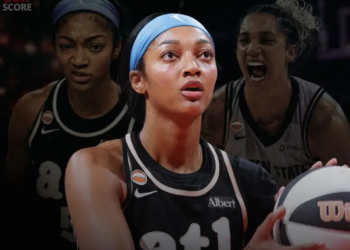
For the Indiana Fever, this conversation carries particular significance. The franchise has become one of the most closely watched teams in women’s basketball, with Caitlin Clark’s popularity helping attract enormous attention while also making the team a focal point for debates extending well beyond the court.
But Duncan’s message raises a bigger question: Can the WNBA continue growing without allowing online hostility and cultural divisions to overshadow the players and the game?
ELLE DUNCAN SAYS WNBA COVERAGE HAS BECOME ‘TOXIC AS HELL’
Duncan’s criticism is not simply about fans disagreeing with one another. Her concern is that the league’s expanding audience has created opportunities for people to exploit racial tensions, gender debates, and player rivalries to generate outrage.
At the Tuned In Summit, Duncan argued that Black and queer women in the WNBA are particularly vulnerable to criticism and harassment.
She suggested that some commentators elevate athletes they identify with while using that attention to diminish or attack other players.
That distinction matters because legitimate sports criticism is an essential part of professional basketball.
Players should be evaluated on their performances. Coaches should face questions about their decisions. Teams should be scrutinized when they fail to meet expectations.
However, criticism of a missed shot, a defensive mistake, or a disappointing season is fundamentally different from racial abuse, threats, or personal attacks directed at an athlete because of her identity.
Duncan believes those lines are increasingly being blurred.
Her comments also reflect the difficult position facing sports journalists. Reporters and broadcasters are expected to discuss controversial issues when they affect the league, but doing so can expose them to intense criticism from audiences who interpret their reporting through political or cultural loyalties.
Duncan acknowledged that speaking about these subjects often brings another wave of online backlash.
Her argument is that the WNBA has an opportunity to celebrate its growing popularity but risks losing sight of that achievement when the loudest conversations revolve around division rather than basketball.
WHY THE INDIANA FEVER HAVE BECOME CENTRAL TO THE WNBA DEBATE
Few teams illustrate the complicated relationship between popularity and controversy more clearly than the Indiana Fever.
The arrival of Caitlin Clark brought unprecedented attention to the franchise, introducing more viewers to the WNBA and creating opportunities for the league to reach new audiences.
That attention has helped make the Fever a major topic of conversation throughout the basketball world.
However, the increased visibility has also placed the team at the center of disputes involving race, fan behavior, player rivalries, and the way women’s basketball is discussed in the media.
Clark’s popularity has sometimes been used by people attempting to pit her against other players, particularly Black athletes who have also become prominent figures in the league.
That dynamic is unfair to the players involved.
Clark should be able to build her career without being held responsible for every person who invokes her name online. Likewise, other WNBA stars deserve recognition for their accomplishments without being reduced to their relationships, real or imagined, with Clark.
A healthy league can celebrate multiple stars simultaneously.
The Fever can benefit from Clark’s popularity while still recognizing the contributions of teammates such as Aliyah Boston and other players across the WNBA.
The real problem emerges when fans treat support for one athlete as a reason to attack another.
That approach turns basketball into a competition between fan identities rather than a celebration of athletic excellence.
For Indiana, the challenge is to ensure that its growing public profile strengthens the franchise’s connection with basketball fans without allowing the loudest online voices to define the team’s identity.
CAITLIN CLARK SHOULD NOT BE BLAMED FOR EVERY CONTROVERSY SURROUNDING HER NAME
Clark’s influence on the WNBA makes her an unavoidable part of this discussion.
Her arrival helped expand the league’s audience, and her performances have made her one of the sport’s most recognizable players.
But fame comes with a difficult reality: Public figures frequently lose control of how other people use their names.
Some fans celebrate Clark because of her shooting, passing, competitiveness, and impact on women’s basketball. Others have attempted to use her popularity to advance arguments about race, representation, or who deserves attention in the sport.
Those motivations should not be treated as interchangeable.
Supporting Clark does not require disrespecting Angel Reese, Aliyah Boston, A’ja Wilson, or any other player.
Similarly, criticizing Clark’s performance does not automatically make someone a hater. Basketball analysis should remain possible without every disagreement becoming a personal conflict.
The same principle applies in reverse. Clark should not be expected to answer for every offensive statement made by someone claiming to be her supporter.
The responsibility belongs to the individuals making those statements.
Clark has previously condemned hateful behavior directed at players, emphasizing that such conduct has no place in basketball or society. That position is consistent with the idea that athletes should be judged by their actions rather than by the behavior of strangers using their names.
For the Fever, maintaining that distinction is important.
The franchise needs an environment in which its players can compete, develop chemistry, and pursue championships without every disagreement becoming another episode in a larger cultural argument.
BLACK AND QUEER WNBA PLAYERS DESERVE BETTER THAN ONLINE HARASSMENT
One of the most important aspects of Duncan’s remarks is her focus on the treatment of Black and queer women.
The WNBA has long featured athletes who have used their platforms to speak about equality, discrimination, and other social issues.
As the league has grown, those conversations have reached a much larger audience. Unfortunately, increased visibility has also brought more opportunities for abuse.
The Associated Press has previously documented growing tensions surrounding race, gender, sexuality, player treatment, and the responsibilities of league leadership as the WNBA’s popularity has increased.
For players, the consequences can extend beyond an unpleasant social media experience.
Repeated harassment can affect their privacy, their sense of security, and the way they experience their jobs. It can also place unnecessary pressure on teammates who are expected to respond to controversies they did not create.
There is an important difference between allowing fans to express opinions and permitting harassment to become an accepted part of the sport.
Fans should be able to debate coaching decisions, question officiating, and criticize poor performances.
But racial slurs, homophobic abuse, threats, and targeted harassment should not be excused as ordinary sports rivalry.
Protecting athletes does not mean shielding them from criticism. It means ensuring that criticism remains focused on basketball rather than becoming an excuse for personal abuse.
That standard should apply to every player in the league, regardless of race, sexuality, popularity, or team affiliation.
THE WNBA’S GROWTH HAS CREATED BOTH OPPORTUNITY AND NEW PRESSURE
The WNBA is experiencing a period in which increased public attention has the potential to transform the sport’s future.
More visibility can attract sponsors, expand television audiences, strengthen team brands, and create greater commercial opportunities for players.
The league’s rising profile has also helped introduce new fans to athletes and teams they might not previously have followed.
Yet growth brings challenges.
When a sport becomes a major topic of national conversation, its stories can attract people who are more interested in political arguments than in the competition itself.
That can create a difficult environment for established fans who want to discuss tactics, statistics, rivalries, and championship ambitions.
It can also make casual viewers believe that following the WNBA requires choosing a side in debates that have little connection to the actual games.
This is a missed opportunity.
The league’s greatest selling point remains the basketball: elite athletes, competitive matchups, individual brilliance, team rivalries, and the pursuit of a championship.
The WNBA does not need to eliminate difficult conversations to protect that appeal. Instead, it needs to make room for meaningful discussion without allowing outrage to become the dominant form of engagement.
For the Indiana Fever, that means their most memorable stories should ultimately be about basketball achievements, player development, and the team’s ability to compete for titles.
Controversy may attract attention in the short term, but sustained success requires a stronger foundation.
WHAT ELLE DUNCAN’S COMMENTS MEAN FOR THE FUTURE OF WNBA COVERAGE
Duncan’s criticism also places pressure on the people responsible for shaping the league’s public image.
Sports broadcasters, journalists, commentators, team officials, and league executives all influence which stories receive attention and how those stories are presented.
The media cannot control every reaction from fans. However, it can make decisions about whether its coverage rewards thoughtful analysis or amplifies conflict simply because controversy generates engagement.
There is a legitimate reason to report on racism, harassment, discrimination, and disputes involving players. Ignoring those subjects would not solve the underlying problems.
At the same time, journalists must distinguish between verified information, informed opinion, speculation, and claims designed primarily to provoke outrage.
That responsibility becomes even more important when athletes are involved in emotionally charged debates.
Duncan has argued that responsibility cannot rest with just one group. Players, fans, the media, and the league must all contribute to improving the environment.
That is a reasonable starting point.
Fans can challenge themselves to criticize performances without attacking identities. Media outlets can provide context rather than encouraging unnecessary rivalries. Players can disagree without turning every debate into a personal confrontation.
The league, meanwhile, can establish clear expectations for acceptable conduct and consistently enforce its policies against abuse.
None of these measures will eliminate every disagreement.
The goal should be to make disagreement possible without allowing hostility to become the defining characteristic of the sport.
THE FEVER’S CHAMPIONSHIP AMBITIONS SHOULD REMAIN THE MAIN STORY
For Indiana, the most important question is what happens on the court.
The Fever’s future will be determined by roster construction, player health, coaching decisions, defensive execution, and the team’s ability to perform against the WNBA’s strongest opponents.
Clark’s development remains an important part of that equation, but she cannot win a championship alone.
Indiana needs contributions across the roster, reliable defense, effective communication, and the consistency required to survive the postseason.
The franchise must also manage the pressure that comes with its growing profile.
When a team attracts enormous attention, every loss can become a referendum on its players, coaching staff, or organizational direction. Every roster move can generate speculation, and every disagreement can be magnified.
That environment can make it difficult to evaluate a team objectively.
A disappointing performance should lead to questions about basketball execution, not automatically trigger another argument about a player’s popularity or the identity of her supporters.
Likewise, a successful season deserves to be celebrated for what the team accomplished rather than being reduced to a debate about which fan base was right.
The Fever’s championship ambitions require an environment where basketball remains the priority.
If the organization can keep its attention on development, chemistry, and performance, it will be better positioned to turn public interest into meaningful progress.
THE WNBA’S NEXT COMMISSIONER WILL FACE A MAJOR CHALLENGE
Duncan’s comments also arrive at a significant moment for league leadership.
She called for the WNBA’s next commissioner to help address the divisions surrounding the sport while building a stronger relationship between players and team owners.
Current commissioner Cathy Engelbert is set to retire after the 2026 season, according to Front Office Sports’ report on Duncan’s remarks.
The next commissioner will inherit a league with substantial opportunities and difficult questions.
How should the WNBA respond to harassment directed at its players? How can it improve communication with athletes? What standards should govern fan conduct? And how can the league encourage debate about sensitive subjects without allowing those debates to overwhelm the competition?
There are no easy answers.
However, leadership will matter because the league cannot expect players to manage every controversy individually.
Clear policies, consistent enforcement, transparent communication, and meaningful engagement with players could help establish a more constructive environment.
The next commissioner will also need to balance commercial growth with the long-term interests of the sport.
Attention is valuable, but attention alone does not guarantee a healthy league.
The challenge will be converting the WNBA’s popularity into lasting investment, stronger relationships with fans, better player support, and a more sustainable future.
MY TAKE: THE WNBA DOES NOT NEED LESS PASSION — IT NEEDS MORE RESPECT
Duncan’s remarks highlight a problem that should concern anyone who wants women’s basketball to continue growing.
Passionate fans are essential to professional sports. They create atmosphere, support players, debate results, and help build the rivalries that make competition exciting.
But passion becomes destructive when it depends on humiliating opposing players or treating every basketball disagreement as a political battle.
The WNBA should not have to choose between growing its audience and protecting the dignity of its athletes.
Nor should fans be discouraged from supporting Clark because other people misuse her popularity. The same applies to supporters of Reese, Boston, Wilson, and every other prominent player.
A better fan culture would allow people to celebrate their favorite athletes without tearing down everyone else.
It would allow journalists to criticize performances without facing personal abuse.
And it would allow the Indiana Fever to be discussed as a basketball team rather than as a permanent symbol in arguments that extend far beyond the court.
The league’s growing popularity makes this moment especially important. If the WNBA can channel its increased attention into meaningful basketball discussion, it could emerge stronger.
If hostility continues to dominate the conversation, however, players and fans may become increasingly exhausted by a culture that rewards conflict more than competition.
The answer is not to stop caring about the WNBA. It is to care enough to make the conversation better.
WHAT HAPPENS NEXT FOR THE INDIANA FEVER AND THE WNBA?
The debate surrounding Duncan’s comments is unlikely to disappear overnight.
The Fever will continue to attract attention because of Clark’s profile, the team’s ambitions, and the broader interest in women’s basketball.
Other players will remain prominent voices in discussions about equality, sports policy, and the responsibilities of professional leagues.
The media will continue facing pressure to cover controversial stories while ensuring that its reporting remains fair, accurate, and proportionate.
The most encouraging outcome would be for the league to use this moment to strengthen its approach to player protection, fan conduct, and public communication.
For Indiana, the priority should remain clear: build a competitive team, support its players, and create an environment in which basketball achievements receive the attention they deserve.
The Fever do not need every fan to agree about every issue. They need players who can compete together, an organization committed to winning, and supporters who understand that loyalty to one athlete does not require hostility toward another.
Ultimately, the WNBA’s future should be defined by the quality of its basketball and the achievements of its athletes.
Duncan has made it clear that she believes the current environment is getting in the way of that future.
Whether her warning becomes a turning point will depend on what the league, its media partners, its teams, and its fans do next.






Discussion about this post