

The Philadelphia Phillies are making another significant change to their coaching staff as they attempt to turn the page after a disappointing postseason exit.
According to a report from The Athletic, the Phillies are hiring Peter Fatse as their new hitting coach, replacing Kevin Long after five seasons in the role. The move comes as Philadelphia searches for answers following an offensive downturn that contributed to another frustrating end to its championship ambitions.
Fatse brings major-league coaching experience, a background in player development and a track record of working with productive offenses during his time with the Boston Red Sox.
But this is not simply a routine coaching change. The Phillies are under pressure to get more out of an expensive roster featuring established stars, and their new hitting coach will inherit a lineup with plenty of talent but several questions to answer.
The biggest challenge is straightforward: Philadelphia must rediscover its offensive consistency before another postseason opportunity slips away.
PHILLIES TURN TO PETER FATSE AFTER KEVIN LONG’S FIVE-SEASON RUN
Fatse is expected to take over as Philadelphia’s hitting coach after serving in that position with Boston from 2022 until April 2026.
He originally joined the Red Sox as an assistant hitting coach following the 2019 season. Before that, he worked as a minor-league hitting coordinator with the Minnesota Twins, gaining experience in player development and offensive instruction.
His coaching background gives the Phillies a candidate who has worked across multiple levels of professional baseball.
Fatse’s time in Boston also provides an important part of the case for his appointment. From 2022 through 2025, the Red Sox ranked fourth in MLB in batting average and sixth in slugging percentage, according to the report.
Those numbers suggest that offenses under Fatse’s watch were capable of producing results, although a hitting coach’s performance must be considered alongside roster quality, player health, organizational philosophy and other coaching responsibilities.
Boston dismissed Fatse and several other coaches in April 2026 after the team’s offense struggled early in the season. He subsequently joined the Tampa Bay Rays’ research and development group as a hitting consultant.
Now, Philadelphia is giving him an opportunity to help rebuild an offense that needs a reset.
Editor’s note: The report describes Fatse’s appointment as expected but not yet officially announced. Confirm the Phillies’ formal announcement before presenting the hire as finalized.
WHY THE PHILLIES DECIDED TO MOVE ON FROM KEVIN LONG
Long spent five seasons as Philadelphia’s hitting coach, beginning in 2022.
His tenure included some productive offensive campaigns, but the Phillies’ 2026 performance raised serious concerns.
According to The Athletic, Philadelphia finished near the bottom of MLB in several important offensive categories, including slugging percentage, on-base percentage and weighted runs created plus, commonly known as wRC+.
The numbers were particularly troubling because the Phillies had a lineup built around established hitters and significant financial commitments.
Philadelphia cannot expect to contend for a World Series if too many of its hitters struggle simultaneously.
The problem was not necessarily that every player suddenly became incapable of hitting. Baseball offenses are affected by injuries, aging, opposing pitching adjustments and natural performance fluctuations.
Nevertheless, when a team experiences widespread regression, the organization must examine its approach.
That includes evaluating hitting instruction, preparation, swing decisions, player development and how effectively the coaching staff adjusts when opposing pitchers expose weaknesses.
Long’s departure signals that the Phillies believe a different voice and approach could help produce better results.
It does not mean Long was solely responsible for the offensive decline, but the coaching change creates an opportunity for Philadelphia to reconsider how it prepares its hitters.
WHAT PETER FATSE BRINGS TO THE PHILLIES
Fatse’s most important task will be identifying ways to make Philadelphia’s existing talent more productive.
The Phillies already have several hitters capable of changing games. Bryce Harper remains a central figure in the lineup, while Kyle Schwarber provides power and Trea Turner offers speed and offensive versatility.
The challenge is getting consistent contributions throughout the batting order rather than relying too heavily on a handful of players.
Fatse will need to assess how individual hitters approach different situations, whether the team is making good swing decisions and how its offensive strategy holds up against high-quality pitching.
His experience in Boston could help him approach those questions with a combination of traditional hitting instruction and modern player-development methods.
His time with the Rays’ research and development group could also prove useful. The role exposed him to an organization known for incorporating analytical information into baseball decisions.
However, working within an analytics department does not automatically guarantee that a coach will transform an offense.
Fatse will need to build trust with Philadelphia’s players, understand their individual strengths and communicate adjustments in a way that produces results on the field.
The most successful hitting coaches do not necessarily force every player into the same approach. They help hitters identify what works for them while preparing them to handle the adjustments opponents make.
That flexibility could be especially important for a Phillies lineup featuring veterans with established routines.
THE PHILLIES’ BIGGEST OFFENSIVE PROBLEM GOES BEYOND ONE COACH
Replacing Long may be an important step, but Philadelphia should not expect a new hitting coach to solve every problem.
The Phillies must determine why so many hitters struggled in 2026 and whether those difficulties were caused by mechanical problems, injuries, poor swing decisions or a combination of factors.
They also need to consider the changing composition of the roster.
Several key players are approaching later stages of their careers, making it increasingly important to develop younger contributors who can provide reliable production.
The organization cannot simply depend on its established stars to carry the offense indefinitely.
Fatse’s arrival should therefore be viewed as one part of a broader effort to improve the roster.
Philadelphia must also evaluate its personnel, bench depth and ability to respond when regular starters enter slumps.
A strong coaching staff can help players perform closer to their potential, but it cannot manufacture production that a roster does not possess.
The Phillies need both better instruction and smart personnel decisions if they want their offensive improvements to last.
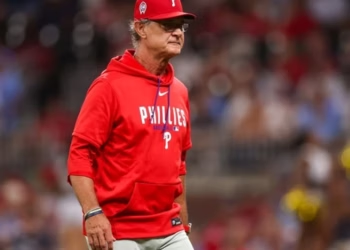
DON MATTLINGLY’S NEW STAFF IS TAKING SHAPE
Fatse’s expected appointment follows Philadelphia’s decision to bring in Carlos Mendoza as its infield and third-base coach.
Mendoza previously managed the New York Mets and brings major-league experience to a staff led by Don Mattingly.
Together, the moves suggest that the Phillies are attempting to reshape the coaching environment before the 2027 season.
Mattingly has emphasized improving the team’s defense while also expressing confidence that the offense can build on its stronger stretches late in the 2026 campaign.
That creates a clear challenge for the revamped staff.
Philadelphia needs to become more consistent offensively without sacrificing defensive reliability. It also needs a coaching structure capable of making adjustments throughout the season rather than waiting until problems become too significant to ignore.
Fatse will be responsible for a particularly visible part of that process.
If the Phillies start hitting more consistently, his appointment will receive considerable praise. If the same offensive problems persist, questions about the coaching change will emerge quickly.
The pressure will be substantial because Philadelphia’s championship window is not unlimited.
WHAT THIS MEANS FOR BRYCE HARPER, KYLE SCHWARBER AND TREA TURNER
The Phillies’ biggest hitters will be central to determining whether the coaching change succeeds.
Harper remains one of the team’s most important offensive players, and Philadelphia needs him to continue producing at a high level.
Schwarber provides power that can change a game with one swing, but his value also depends on maintaining a productive approach at the plate.
Turner gives the Phillies another important dimension through his speed, contact ability and capacity to generate offense in different ways.
Fatse must understand the strengths and weaknesses of each player rather than trying to apply one universal philosophy.
For veterans, a coaching change can create an opportunity to identify small adjustments that make a meaningful difference. For younger hitters, it can provide a fresh perspective and a chance to establish more effective habits.
The key will be whether players buy into the new approach.
Philadelphia has enough established talent to remain dangerous, but the lineup must produce more consistently against elite pitching if the club wants a longer postseason run.
Fatse’s success will ultimately be judged by what happens on the field, not by his previous job titles.
MY VERDICT: FATSE HAS AN OPPORTUNITY, BUT THE PRESSURE IS ON
The Phillies’ decision to bring in Fatse represents a meaningful attempt to address one of the team’s most frustrating weaknesses.
His experience with the Red Sox and his more recent work with Tampa Bay’s research and development group make him an interesting candidate for a team seeking a different offensive approach.
But Philadelphia should not expect a quick fix simply because it has changed hitting coaches.
Fatse must establish credibility with the players, identify the causes of the 2026 regression and help the lineup become more disciplined and productive.
The front office must also give him a roster capable of succeeding.
The encouraging part for Phillies fans is that the team does not need to rebuild its entire offense from scratch. It already has a collection of established hitters who have demonstrated that they can produce at a high level.
The challenge is getting those players to perform consistently at the same time.
If Fatse can help Philadelphia improve its on-base production, generate more extra-base hits and reduce the stretches when the lineup disappears, his appointment could become one of the most important coaching decisions of the offseason.




Discussion about this post