

The tension surrounding Celtic’s leadership has taken another turn after former manager Gordon Strachan delivered a blunt message to supporters who confronted principal shareholder Dermot Desmond during a protest in St Andrews.
Strachan believes the demonstration failed to achieve its intended purpose, arguing that hostile behaviour does little to encourage meaningful communication between supporters and the people responsible for running the club.
His comments arrive at a difficult moment for Celtic, with sections of the fanbase increasingly vocal about the board’s decisions and the direction of the Scottish champions. The controversy has also coincided with news that Desmond has sold his Betdaq betting exchange business to Matchbook, adding another development involving the influential Irish businessman to the wider conversation.
Although the financial details of the transaction have not been disclosed, the combination of supporter unrest and renewed attention on Desmond’s business interests has ensured that the Celtic boardroom remains under scrutiny.
For a club with Celtic’s history, ambitions, and passionate support, the central question is whether the current disagreement can lead to constructive dialogue or become another prolonged conflict between the board and the stands.
GORDON STRACHAN CRITICISES THE APPROACH TAKEN BY CELTIC PROTESTERS
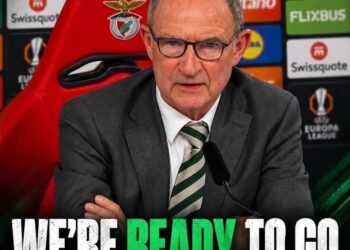
Strachan, who managed Celtic between 2005 and 2009, has weighed in on the controversy following the confrontation involving Desmond at the Alfred Dunhill Links Championship in St Andrews.
According to the report published by the Daily Record on October 14, 2026, supporters wearing balaclavas confronted Desmond during the golf event. The demonstration prompted further criticism from the club, while the Celtic Fans Collective shared its account of the incident through statements and video footage.
The Green Brigade and the Celtic Supporters’ Trust have also taken vocal positions amid the broader dispute with the club’s leadership.
Strachan, who worked closely with Desmond during his managerial tenure, believes supporters have every right to express dissatisfaction but must consider how their methods affect the possibility of productive discussions.
Speaking to BOYLE Sports, Strachan argued that disrupting events and throwing objects crossed the line from legitimate protest into unacceptable behaviour.
His central message was that meaningful communication requires both sides to understand each other’s concerns.
Strachan’s position does not necessarily mean that every criticism of the Celtic board is unjustified. Rather, it highlights the distinction between expressing dissatisfaction and adopting tactics that risk making an already difficult relationship worse.
That distinction is particularly important at Celtic, where supporters have historically played a significant role in shaping the club’s identity and holding its leadership accountable.
WHY DERMOT DESMOND HAS BECOME A FOCUS OF SUPPORTER FRUSTRATION
Desmond is Celtic’s principal shareholder and one of the most influential figures in the club’s modern history.
His position gives him considerable influence over the club’s ownership structure and long-term direction, making him a natural focal point when supporters disagree with decisions made at boardroom level.
However, the relationship between football clubs and their supporters is rarely straightforward.
Fans judge a club not only by its financial position but also by its ambition, recruitment, communication, and ability to compete for trophies.
For Celtic supporters, expectations are especially high because of the club’s domestic success and its long-standing rivalry with Rangers.
When supporters believe the club is failing to meet those expectations, frustration can quickly spread beyond individual transfer decisions or disappointing results.
The challenge for Celtic’s leadership is to demonstrate that it understands those concerns while explaining its own priorities and plans.
For supporters, the challenge is to make their demands clear enough that the club cannot simply dismiss them as expressions of anger.
Neither side benefits when disagreements become so personal that meaningful discussion becomes impossible.
THE BETDAQ SALE: WHAT WE KNOW ABOUT DERMOT DESMOND’S BUSINESS DEAL
The controversy surrounding Desmond has coincided with the reported sale of Betdaq to Matchbook.
Desmond founded Betdaq in 2000, establishing a betting exchange that became one of the earlier businesses operating in that part of the gambling industry.
In 2013, the business was sold to Ladbrokes in a transaction previously reported to be worth £25 million. Desmond subsequently bought it back from Ladbrokes’ parent company, Entain, eight years later.
The latest agreement will bring Betdaq under Matchbook’s ownership.
Matchbook chief executive Ronan McDonagh said the company’s priority during the transition was to protect customers’ funds and provide clearer options, while combining the exchanges’ liquidity to improve the experience for users.
The financial terms of the latest sale have not been disclosed in the report.
Consequently, the previously reported £25 million figure relates to the 2013 transaction and should not be presented as the confirmed value of the new deal.
The sale is relevant because it provides another glimpse into Desmond’s wider business activities. However, there is no established evidence in the report that the transaction is connected to Celtic’s current footballing decisions or the supporters’ protest.
Keeping those issues separate is important. The ownership of a private business and the governance of a football club may involve the same individual, but one development does not automatically explain the other.
CELTIC’S BOARDROOM DISPUTE COULD BECOME A DISTRACTION
Celtic’s supporters and leadership have a shared interest in seeing the club remain competitive.
Yet a prolonged dispute can create problems even when the team continues winning matches.
Uncertainty surrounding the relationship between the board and supporters can dominate headlines, overshadow footballing achievements, and make communication about the club’s long-term direction more difficult.
For players and coaching staff, the immediate priority remains preparing for matches and competing for silverware. They cannot control every ownership disagreement, but the atmosphere surrounding a club can influence the wider environment in which they work.
For the board, the situation presents a test of leadership.
A convincing response would involve explaining the club’s priorities, listening to legitimate concerns, and providing supporters with meaningful information wherever possible.
Simply criticising the protest may address the behaviour witnessed in St Andrews, but it will not necessarily resolve the underlying disagreements that prompted supporters to demonstrate.
Likewise, supporters will need more than public expressions of anger if they want to influence decisions. Clear demands, organised representation, and sustained dialogue are more likely to produce measurable outcomes.
The longer the disagreement continues without progress, the greater the risk that both sides become entrenched.
DOES GORDON STRACHAN HAVE A POINT?
Strachan’s argument deserves consideration, particularly his emphasis on communication.
A protest can attract attention, but attention alone does not guarantee change.
If the goal is to influence a club’s leadership, supporters need to establish what they want changed and identify a credible route towards achieving it.
Hostile confrontations can make that process more difficult by shifting attention away from the original concerns and towards the conduct of those involved.
However, the same principle applies to football executives.
Supporters are unlikely to feel heard if their concerns are met only with criticism of their behaviour. The club must also consider why dissatisfaction has grown and whether its communication with fans is sufficient.
There is a difference between defending the right to protest and endorsing every tactic used during a demonstration.
Strachan’s comments can therefore be understood as a warning about effectiveness rather than a blanket rejection of supporter criticism.
The strongest outcome would be one in which Celtic’s leadership addresses legitimate grievances and supporters express their concerns in ways that encourage accountability rather than further confrontation.
WHAT HAPPENS NEXT FOR CELTIC AND DERMOT DESMOND?
The immediate question is whether the dispute leads to a more constructive relationship between Celtic’s leadership and organised supporter groups.
Several developments could shape the next stage.
First, the club’s response to the protest will matter. A clear explanation of its position could help reduce speculation, although it may not satisfy supporters who believe more substantial changes are necessary.
Second, the supporters’ groups will need to decide how they intend to maintain pressure. Their influence will depend partly on whether they can communicate specific objectives and sustain engagement beyond a single demonstration.
Third, the football team’s performances will remain important. Strong results can provide some relief from external tensions, but success on the pitch will not automatically resolve disagreements about governance or communication.
Desmond’s Betdaq sale is a separate business development, and its undisclosed financial terms mean that firm conclusions about its significance to his personal finances would be premature.
There is also no confirmed indication that the transaction will change his position at Celtic.
For now, the most reasonable prediction is that the disagreement will continue to attract attention until either the club and supporters establish a clearer dialogue or another development changes the focus of the debate.
FINAL VERDICT: CELTIC NEEDS MORE THAN AN END TO PROTESTS
Gordon Strachan has delivered a clear message to the Celtic supporters who confronted Dermot Desmond in St Andrews: hostile behaviour is unlikely to produce the constructive conversation the club needs.
His intervention highlights a wider challenge facing Celtic as disagreements between the board and sections of the fanbase continue.
Supporters have a legitimate interest in how their club is run, and they should be able to express dissatisfaction. At the same time, the methods used to communicate that dissatisfaction can influence whether their concerns receive serious consideration.
The responsibility does not rest with supporters alone.
Celtic’s leadership must also decide how best to address the frustrations behind the protests and rebuild confidence where it has been lost.
Meanwhile, Desmond’s reported sale of Betdaq to Matchbook represents a separate business development whose financial terms remain undisclosed.
Ultimately, Celtic’s best path forward is likely to involve greater clarity, constructive communication, and a shared focus on the club’s future.
The supporters want a club that reflects their ambitions. The leadership must demonstrate that it understands those ambitions and has a credible plan to meet them.









Discussion about this post