

The WNBA has no shortage of rivalries, passionate fan debates, and social media arguments. But when conversations about its biggest stars become more focused on personal attacks than basketball, an important question emerges: Are fans losing sight of what makes these athletes worth celebrating?
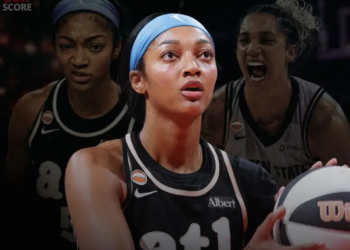
An image circulating online praises Indiana Fever superstar Caitlin Clark and New York Liberty guard Sabrina Ionescu for their commitment to their teams, while criticizing the hostility directed at them. The graphic carries the message “Pay Us What You Owe Us” and argues that the players’ dedication and loyalty deserve more attention than the criticism surrounding them.
Although the image attributes its accompanying statement to Luna Williams, that attribution has not been independently verified. The broader discussion, however, touches on an issue that continues to follow the WNBA: how to celebrate its growing popularity without allowing fan rivalries and online hostility to overshadow the game.
For the Indiana Fever, Clark’s influence extends well beyond the scoreboard. And for the WNBA as a whole, the way its biggest names are discussed could shape the league’s future as it attracts more viewers, commercial interest, and new fans.
CAITLIN CLARK HAS BECOME BIGGER THAN BASKETBALL
Since entering the WNBA, Caitlin Clark has attracted enormous attention, bringing new viewers to Indiana Fever games and generating conversations across the sports world.
That visibility comes with advantages. More attention can create greater commercial opportunities, increase interest in the Fever, and introduce the league to fans who might not otherwise follow women’s basketball.
But there is a downside to being one of the sport’s most recognizable faces.
Clark is frequently at the center of arguments that extend beyond her performances. Her supporters and critics sometimes turn ordinary basketball discussions into debates about identity, popularity, media coverage, and which players receive the most attention.
That environment can make it difficult to separate legitimate basketball criticism from personal hostility.
Clark should be evaluated fairly, just like every other player. Her decisions, shooting, playmaking, defense, and availability can all be discussed without turning the conversation into an attack on her character.
The same standard should apply to her supporters. Defending Clark does not require dismissing other WNBA stars, and appreciating her impact does not mean every criticism of her game is unfair.
The real test for Clark’s growing fan base is whether it can celebrate her success without treating every disagreement as a personal battle.
WHY SABRINA IONESCU ALSO DESERVES RECOGNITION
Sabrina Ionescu has established herself as one of the WNBA’s leading guards through her shooting, playmaking, leadership, and ability to influence games for the New York Liberty.
Her career deserves to be discussed on its own merits rather than through comparisons designed primarily to provoke arguments between fan bases.
Clark and Ionescu represent different teams and have distinct playing styles, but both contribute to the league’s appeal. Their performances give fans compelling basketball to watch, while their visibility helps introduce the sport to a broader audience.
Comparisons between elite players are inevitable. Fans debate shooting ability, leadership, individual awards, playoff performances, and championship credentials in every major sport.
Those discussions can be entertaining when they are grounded in evidence.
The problem begins when comparisons become excuses to demean one player to elevate another. A player’s achievements do not become less valuable simply because a rival is receiving attention.
The WNBA benefits when fans recognize the quality of its talent across the league. Clark can attract viewers to Indiana, Ionescu can energize New York supporters, and both can contribute to a more competitive and commercially successful league.
THE MESSAGE BEHIND “PAY US WHAT YOU OWE US”
The phrase “Pay Us What You Owe Us” has a significant connection to the WNBA’s ongoing push for better compensation and a greater share of the league’s financial growth.
At the 2025 WNBA All-Star Game in Indianapolis, players wore shirts displaying the message as they pushed for a new collective bargaining agreement. Their demonstration brought attention to salaries, revenue sharing, benefits, and the value players believe they contribute to the league.
The protest was about more than individual contracts. It reflected a broader question about how athletes should benefit as their sport attracts more viewers, commercial partnerships, and investment.
That debate matters for Clark, Ionescu, and their fellow players.
The WNBA cannot build a sustainable future on star power alone. It also needs a system that supports competitive teams, rewards players fairly, develops talent, and provides an attractive product for fans.
As the league grows, the relationship between its players and its business model will remain central to its future.
The slogan also illustrates why the league’s stars should not be reduced to social media controversies. These athletes are competitors, entertainers, professionals, and important contributors to a growing sports business.
Their value should be discussed in terms of their work and the broader league they help build.
WHY ONLINE HATE CAN HURT THE WNBA
Strong opinions are part of sports culture. Rivalries create excitement, and debate can keep fans engaged long after the final buzzer.
But there is a difference between passionate disagreement and harassment.
When criticism becomes personal, it can discourage meaningful discussion and make sports communities less welcoming to new fans. It can also distract from the performances, tactics, and competitive storylines that make basketball interesting.
The WNBA faces a particular challenge because its expanding audience includes people with different expectations, loyalties, and perspectives. Some fans follow a particular player, others support a franchise, and many are discovering the league for the first time.
That diversity should be an advantage.
A healthy fan culture allows people to support Clark without attacking Ionescu, celebrate Ionescu without insulting Clark, and criticize either player’s performance without questioning her worth as a person.
It also means recognizing that players are not responsible for every action taken by someone who claims to support them.
The league cannot control every online argument, but teams, media organizations, players, and fans can help establish a better standard for discussing the sport.
WHAT THIS MEANS FOR THE INDIANA FEVER
For Indiana, Clark’s popularity is an important part of the franchise’s identity. But the Fever’s long-term success will depend on more than attention, ticket demand, or social media engagement.
Championship ambitions require a strong roster, effective coaching, player development, good health, and consistent performances when the stakes are highest.
Clark’s ability to create opportunities for teammates is an important part of that equation. So is the Fever’s ability to surround its core players with the right combination of shooting, defense, rebounding, and experience.
The organization must also ensure that the public conversation does not become a substitute for basketball progress.
A team can dominate headlines without winning a championship. Conversely, a team that builds a balanced roster and performs well in the postseason can strengthen its reputation through results.
For the Fever, the most meaningful response to outside criticism will be continued improvement on the court.
If Clark and her teammates can turn their talent into sustained postseason success, the conversation will increasingly include the things that matter most to a championship contender: execution, chemistry, resilience, and winning basketball.
COULD CLARK AND IONESCU HELP BRING MORE FANS TO THE WNBA?
The league has an opportunity to use the visibility of its biggest stars to expand interest in women’s basketball.
Clark brings a distinctive playmaking style and a large following. Ionescu offers her own blend of perimeter shooting, leadership, and competitive experience. Their presence gives fans more reasons to watch games, follow teams, and discuss the league.
That attention becomes more valuable when it encourages people to discover players and teams beyond their original favorites.
A Clark fan who begins watching the WNBA might develop an appreciation for Ionescu, A’ja Wilson, Breanna Stewart, Napheesa Collier, or another standout. Likewise, an established Liberty supporter might become interested in Indiana because of the competition between the teams.
This is how a league builds deeper engagement: one star creates an entry point, but the quality of the overall product gives fans reasons to stay.
The danger is allowing every conversation to become a rivalry between personalities. That approach might generate short-term engagement, but it risks limiting appreciation of the league’s depth.
The WNBA is strongest when its stars are allowed to compete fiercely while still being recognized as part of the same growing sport.
MY TAKE: RESPECT SHOULD NOT DEPEND ON WHICH TEAM YOU SUPPORT
The message in the circulating image raises a worthwhile point, even though its attribution should be treated cautiously: commitment and professional achievement deserve recognition regardless of a player’s popularity.
Clark does not need to be universally liked to be respected. Ionescu does not need to win every comparison to receive credit for her accomplishments. Neither player should have to avoid criticism to be treated fairly.
Sports are built around disagreement. Fans will argue about who is better, which team has the strongest roster, and who deserves the biggest awards. Those debates are part of what makes competition exciting.
But criticism should be based on performance, not personal hostility.
It is also important to apply the same principle to every player in the league. Respect cannot be reserved only for athletes with large fan bases or those whose personalities appeal to a particular audience.
If the WNBA wants to continue growing, it needs fans who can appreciate its stars without tearing down everyone else.
The best rivalries make basketball more compelling. The worst ones turn the athletes into targets and distract from the sport itself.
WHAT HAPPENS NEXT FOR CLARK AND THE WNBA?
Clark’s next challenge is to continue developing her game and help Indiana build a team capable of competing consistently at the highest level.
For Ionescu and New York, the objective remains competing for championships while maintaining the high standard expected of a leading WNBA franchise.
Their paths will inevitably intersect in conversations about the league’s best guards, most influential players, and biggest attractions. Those comparisons will continue because both athletes have earned attention through their basketball careers.
The broader prediction is that the WNBA’s biggest stars will remain central to discussions about the league’s future, including its competitive balance, player compensation, media attention, and relationship with fans.
How those conversations unfold will depend partly on the quality of the basketball and partly on whether fans choose to make room for informed disagreement.
Clark and Ionescu do not have to agree on everything, play for the same team, or share the same fan base to be respected.
Ultimately, the league’s progress will be measured not by how many online arguments its stars generate, but by the quality of the competition, the opportunities available to its players, and the loyalty of fans who keep coming back.
The bottom line: Support your favorite player, debate the game, and demand excellence from your team. But respect should never depend on whether an athlete wears your team’s colors.







Discussion about this post