

The Philadelphia Phillies may need to rethink their managerial search after Alex Cora reportedly decided to sit out the 2027 season. Now, could former Phillies fan favorite Raúl Ibañez emerge as an intriguing alternative? His connection to Philadelphia and experience inside the Dodgers’ front office make him an interesting name to discuss, but one major question remains: Is he ready to manage a major-league clubhouse?
The Philadelphia Phillies’ search for their next manager has taken another unexpected turn.
Alex Cora, who appeared to be a leading candidate to take over the dugout, has reportedly declined the opportunity to manage Philadelphia in 2027 and intends to take the season off. That decision leaves president of baseball operations Dave Dombrowski facing an important choice about the franchise’s leadership.
One name that could generate excitement among Phillies fans is Raúl Ibañez.
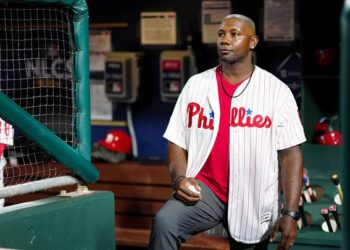
For Philadelphia supporters, Ibañez is more than another former player. He was part of the Phillies teams that reached consecutive World Series in 2008 and 2009, including the memorable 2009 season when Philadelphia returned to the Fall Classic.
Today, Ibañez serves as the Los Angeles Dodgers’ vice president of baseball development and special projects, a position that gives him experience in a modern baseball organization’s front office.
That combination of familiarity with Philadelphia and experience beyond his playing career makes him an interesting hypothetical candidate.
However, there is an important distinction between being a respected former player and being prepared to manage a major-league team.
Ibañez has not managed an MLB team, so his candidacy should be viewed as a possibility for discussion rather than a confirmed Phillies pursuit.
WHY RAÚL IBAÑEZ COULD APPEAL TO PHILLIES FANS
Ibañez has a connection to Philadelphia that few potential managerial candidates could immediately match.
During his time with the Phillies from 2009 through 2011, he became a familiar presence on a team built around championship expectations.
His first season in Philadelphia was particularly memorable. In 2009, Ibañez hit 34 home runs and recorded an .899 OPS during the regular season, helping the Phillies return to the World Series.
That history could matter if he ever entered the managerial conversation.
Philadelphia is a demanding baseball market. Fans expect results, players face intense scrutiny, and the pressure surrounding a championship contender can become overwhelming when expectations are not met.
A former player who understands the city and its baseball culture might have an advantage when establishing relationships with supporters and communicating the organization’s ambitions.
Ibañez would also bring the perspective of someone who played in meaningful postseason games.
But nostalgia alone cannot win games.
The Phillies would need to evaluate whether his leadership style, baseball philosophy, communication skills, and approach to in-game decisions translate into success as a manager.
His playing history might open the door to a conversation, but his preparation for the position would ultimately determine whether the opportunity makes sense.
HIS DODGERS FRONT-OFFICE EXPERIENCE COULD BE A MAJOR ADVANTAGE
One of the most interesting aspects of Ibañez’s background is his experience outside the playing field.
After retiring as a player, he worked in baseball operations for Major League Baseball before joining the Dodgers’ front office in 2024.
His role with MLB involved work related to on-field operations, rules, technology, scouting, and amateur baseball initiatives. His current Dodgers position focuses on baseball development and special projects.
That experience could be relevant to a managerial opportunity in Philadelphia.
Modern baseball managers must do considerably more than fill out a lineup card and decide when to change pitchers.
They must communicate with analysts, understand performance information, collaborate with coaches, manage player workloads, and help players translate scouting reports into decisions on the field.
A candidate who has spent years around baseball operations could bring a broader understanding of how an organization evaluates talent and develops players.
For the Phillies, that could be particularly important as they evaluate an expensive roster and attempt to improve their postseason results.
However, front-office experience does not automatically translate into managerial expertise.
Managing 26 players through a long season requires a different set of responsibilities, including handling difficult conversations, maintaining clubhouse trust, navigating losing streaks, and making high-pressure decisions.
Ibañez’s background could be an asset, but the Phillies would need to determine whether he has the practical preparation to lead a major-league dugout.
THE BIGGEST CONCERN: IBAÑEZ HAS NEVER MANAGED AN MLB TEAM
This is where the debate becomes most interesting.
The Phillies are not rebuilding from scratch. They have a veteran roster with significant financial commitments and players who expect to compete for a championship.
Hiring a first-time major-league manager would introduce an element of uncertainty.
Ibañez would need to learn the demands of the position while managing the expectations of an organization that has made the postseason repeatedly in recent years.
He would be responsible for setting the lineup, coordinating with the coaching staff, handling pitching changes, communicating with the front office, and keeping the clubhouse focused throughout a difficult season.
Every major decision would face scrutiny.
A questionable bullpen move or a lineup decision that backfires could quickly become a major talking point in Philadelphia.
That does not mean a first-time manager cannot succeed.
Several successful managers have entered the position without previous major-league managerial experience. Their results depend on preparation, staff support, communication, adaptability, and their ability to earn the players’ trust.
The important question is whether Ibañez would be ready for that responsibility in 2027.
If the Phillies considered him, they would need to conduct a thorough evaluation rather than assuming his playing reputation and front-office experience were sufficient qualifications.
COULD IBAÑEZ HELP THE PHILLIES FIX THEIR BIGGEST PROBLEMS?
Philadelphia’s managerial decision should be about more than finding a familiar face.
The Phillies need to determine what went wrong in 2026 and how their next manager could help address those problems.
The team finished the season with 88 wins before being eliminated by the Atlanta Braves in the National League Wild Card Series. Its disappointing postseason finish followed a campaign in which the organization changed managers during the regular season.
The next manager must be prepared to work with the existing roster while helping the organization identify areas for improvement.
That includes improving offensive consistency, managing the bullpen effectively, strengthening communication, and making better adjustments against postseason opponents.
Could Ibañez contribute to those objectives?
His baseball-development background could make him an interesting candidate, particularly if the Phillies want a manager who understands the relationship between player development, analytics, and on-field execution.
His experience as a major-league hitter could also be useful when communicating with players about preparation and offensive adjustments.
Still, there is no guarantee that his approach would translate into better results.
The Phillies would need to establish whether he has the leadership qualities and tactical experience required to guide a championship contender.
A strong coaching staff would be especially important if the organization chose to hire a manager without previous major-league experience.
WHY DON MATTINGLY REMAINS AN IMPORTANT PART OF THE CONVERSATION
While Ibañez is an intriguing name to discuss, Don Mattingly remains a significant part of Philadelphia’s managerial situation.
Mattingly took over after the Phillies dismissed Rob Thomson in April and guided the team to a 79-55 record for the remainder of the regular season.
That turnaround gives Philadelphia a substantial reason to evaluate his performance before looking outside the organization.
Mattingly also has extensive managerial experience with the Los Angeles Dodgers and Miami Marlins.
Unlike Ibañez, he would not need to adjust to the responsibilities of running a major-league dugout for the first time.
His familiarity with the Phillies’ players and coaching staff could also provide continuity during an offseason filled with important roster decisions.
Nevertheless, the team must evaluate the full picture, including its late-season performance and postseason elimination.
Retaining Mattingly would be a decision based on his overall record, clubhouse relationships, leadership, and ability to improve the team.
Considering Ibañez or another outside candidate would represent a different approach, potentially emphasizing a new voice and a different baseball philosophy.
Neither route should be chosen simply because it is familiar or exciting.
The Phillies must determine which candidate best matches their goals for 2027.
COULD RAÚL IBAÑEZ BE A DARK-HORSE CANDIDATE?
At this stage, Ibañez is best described as a hypothetical candidate rather than an established favorite.
His playing history with Philadelphia makes the idea appealing, while his Dodgers front-office position gives him a background that extends beyond his years as a player.
Those are legitimate reasons to discuss his name.
But there is a difference between identifying a candidate who could make sense and reporting that a team is actively pursuing him.
There is no confirmation in the reporting cited here that the Phillies have interviewed Ibañez or identified him as a leading candidate.
The organization could decide to retain Mattingly, explore other experienced managers, or conduct a broader search.
The fact that Cora has declined the opportunity does not automatically mean Philadelphia will turn to a former player.
Dombrowski must consider the team’s immediate championship ambitions, the strengths and weaknesses of the roster, and the leadership qualities required to get the most out of its players.
If Ibañez eventually becomes a serious candidate, his interviews and managerial vision would be crucial in determining whether he is prepared for the role.
Until then, his name remains an intriguing possibility for Phillies fans to debate.
FINAL VERDICT: NOSTALGIA OR A NEW DIRECTION?
Raúl Ibañez would represent an unconventional option for the Philadelphia Phillies.
His connection to the 2009 World Series team could generate enthusiasm among fans, while his experience with MLB and the Dodgers offers a perspective that extends beyond his playing career.
However, the lack of major-league managerial experience is a significant consideration.
Philadelphia needs a leader who can manage a veteran clubhouse, make difficult in-game decisions, communicate effectively, and help the organization turn its talent into postseason success.
Ibañez could be an interesting candidate to evaluate, but the Phillies would need to establish whether he is ready to handle those demands.
The organization should not hire him simply because fans remember his contributions as a player. Nor should it automatically dismiss him because he has never managed an MLB team.
His candidacy would need to stand on its own merits.



Discussion about this post