

The Philadelphia Phillies could face a significant front-office decision this offseason, and it has little to do with adding another power hitter or finding a solution to their postseason struggles.
Instead, the organization could lose a key executive who has already demonstrated the ability to operate at the highest levels of baseball management.
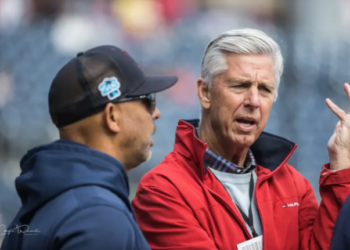
According to a report by The Athletic’s Ken Rosenthal, the Athletics have identified Philadelphia Phillies executive Sam Fuld as a leading candidate to head their baseball operations department. The potential move presents Philadelphia with an uncomfortable question: Should the organization allow a promising executive to pursue a bigger opportunity elsewhere, even when his departure could affect the franchise’s long-term future?
Fuld, 44, has an unusual combination of baseball experience, analytical knowledge and business education. He previously served as the Phillies’ general manager under president of baseball operations Dave Dombrowski before transitioning into a business leadership role after completing his MBA at the University of Pennsylvania’s Wharton School.
His potential departure comes at a difficult time for Philadelphia. The Phillies are coming off another disappointing postseason elimination and must make difficult decisions about their roster, coaching staff and long-term championship ambitions.
Although Fuld’s possible departure would not automatically derail the franchise, it raises important questions about the organization’s succession planning, leadership structure and willingness to retain emerging talent.
WHO IS SAM FULD, AND WHY ARE THE ATHLETICS INTERESTED?
Sam Fuld is not a traditional baseball executive who spent his entire career working in front offices.
Before moving into management, he played professional baseball as an outfielder, giving him firsthand experience with the demands of a major-league clubhouse.
He joined the Phillies organization in 2018 as a player information coordinator before advancing into increasingly important leadership positions.
In 2021, Fuld became the Phillies’ general manager, working under Dombrowski as the organization pursued a return to championship contention.
That experience placed him close to the decisions that shape a competitive roster, including player evaluation, organizational strategy and the relationship between scouting and analytics.
Fuld later stepped away from his full-time baseball operations responsibilities to pursue his MBA at Wharton. After graduating in May 2026, he became the Phillies’ president of business operations.
Now, the Athletics’ reported interest suggests that his combination of baseball knowledge and business experience could make him an attractive candidate to lead another organization’s baseball department.
For the Athletics, the opportunity to hire an executive with experience inside a major-league front office could represent an important step in building their long-term organizational structure.
For the Phillies, however, the situation creates a potential problem: An executive who understands their organization could become a valuable leader for a competing franchise.
WHY WOULD THE PHILLIES LET A POTENTIAL FUTURE LEADER LEAVE?
The most important distinction in this situation is that Fuld’s potential departure does not necessarily mean Philadelphia wants to lose him.
Rather, his current position and the Athletics’ reported interest create a situation in which the Phillies may have limited control over his next career move.
As president of business operations, Fuld currently holds a significant leadership position within the organization. However, returning to a top baseball operations role elsewhere could offer a different career trajectory.
The Athletics’ reported interest is particularly notable because leading baseball operations would place Fuld in charge of decisions that influence the entire roster-building process.
That could include evaluating players, overseeing scouting, managing the farm system, coordinating analytics and helping establish a long-term competitive strategy.
Philadelphia would have to consider whether it could offer Fuld a comparable opportunity in the future.
Dave Dombrowski remains the Phillies’ president of baseball operations, and the organization has not announced a succession plan that would guarantee Fuld a future return to that position.
If Fuld believes his best opportunity to become a baseball operations leader lies outside Philadelphia, the Phillies could find themselves competing against another organization’s willingness to give him that responsibility.
The uncomfortable reality is that organizations cannot always retain promising executives simply because they recognize their potential. They must also provide a convincing reason for those executives to stay.
DAVE DOMBROWSKI’S FUTURE ADDS ANOTHER LAYER TO THE STORY
The Phillies’ leadership situation becomes more interesting when viewed alongside the future of Dave Dombrowski.
Dombrowski is one of baseball’s most experienced executives, having helped build championship-caliber teams throughout his career. His arrival in Philadelphia was intended to help turn an increasingly talented roster into a consistent World Series contender.
The Phillies reached the World Series in 2022 and advanced to the National League Championship Series in 2023. However, subsequent postseason eliminations have increased the pressure on the organization to find a winning formula.
Philadelphia’s latest elimination by the Atlanta Braves in the 2026 National League Wild Card Series has intensified questions about the team’s direction.
If Dombrowski eventually moves on, the Phillies will need a clear plan for who takes responsibility for the organization’s baseball operations.
Fuld could be viewed as one possible future leader because of his previous experience as general manager.
However, there is no guarantee that Philadelphia would select him for such a position, even if he remained with the organization.
The Phillies might prefer an external candidate, promote another executive or retain their existing leadership structure for an extended period.
That uncertainty is precisely why the Athletics’ reported interest matters.
If Philadelphia does not have an immediate plan to elevate Fuld, another organization could provide the opportunity he wants before the Phillies are ready to make a change.
From a business perspective, the Phillies must balance their current leadership needs against the possibility of losing an executive who could become more valuable in the coming years.
THE PHILLIES’ BIGGEST PROBLEM IS NOT JUST THE ROSTER
Philadelphia’s most visible problems are on the field, but its organizational decisions will help determine whether those problems can be corrected.
The Phillies finished the 2026 regular season with a 9-19 start under manager Rob Thomson before dismissing him in April. Don Mattingly subsequently took over and helped the team recover, finishing with a 79-55 record from the managerial change through the end of the regular season.
Despite that recovery, Philadelphia was eliminated by Atlanta in the Wild Card Series.
The result continued a frustrating pattern for a franchise that has invested heavily in established major-league talent.
The Phillies have a roster capable of competing with the National League’s best teams, but their offensive inconsistency, bullpen concerns and postseason disappointments have exposed the need for meaningful adjustments.
Those changes will require more than signing one free agent or making a single trade.
The organization must evaluate which players remain essential to its championship ambitions, which prospects are ready to contribute and which investments have failed to deliver the expected returns.
A strong front office must coordinate those decisions while maintaining a long-term perspective.
That is where executive continuity becomes important.
Losing an experienced or promising decision-maker can disrupt communication, organizational priorities and the development of a consistent roster-building strategy.
Still, Philadelphia’s baseball operations department includes other executives with substantial responsibilities, so Fuld’s potential departure would not leave the organization without experienced leadership.
The larger concern is whether the Phillies can preserve the institutional knowledge and succession planning necessary to remain competitive for years to come.
WHY THE ATHLETICS COULD OFFER FULD AN ATTRACTIVE OPPORTUNITY
The Athletics’ interest in Fuld makes sense when considering the challenges of building a sustainable major-league contender.
Unlike a team that is primarily trying to preserve an established championship core, an organization in a rebuilding or transitional phase may need an executive who can establish a broader vision for the future.
That process involves identifying undervalued players, developing prospects, building a strong scouting department and determining how to allocate financial resources.
Fuld’s combination of playing experience, previous general manager responsibilities and business education could be appealing in that environment.
His experience in Philadelphia would also give him an understanding of how a high-profile organization operates under pressure to win immediately.
However, there is an important distinction between being a promising executive and proving that one can successfully lead an entire baseball operations department.
Running a franchise requires making difficult personnel decisions, managing competing priorities and building a system that produces results over multiple seasons.
The Athletics would have to decide whether Fuld is ready to take on that responsibility.
If they believe he is, the opportunity could represent a major career advancement.
For Philadelphia, the possibility illustrates why front offices must continually develop their own future leaders while recognizing that successful development can make those executives attractive to other teams.
COULD LOSING FULD HURT THE PHILLIES’ WORLD SERIES CHANCES?
The immediate effect of Fuld’s potential departure would probably be less dramatic than losing a star player or a frontline starting pitcher.
A front-office executive does not directly determine what happens during a postseason game.
However, executives influence the decisions that help determine which players are available when those games arrive.
The Phillies need to improve several areas following their latest playoff disappointment, including offensive production, bullpen reliability and the balance between veteran players and younger talent.
They also face important decisions about free agents, potential trades and the future of their coaching staff.
If Fuld were to leave, the organization would need to ensure that those responsibilities remain clearly assigned and that its decision-making process continues without disruption.
The potential long-term impact is more significant.
A franchise’s championship window depends not only on the quality of its current roster but also on its ability to identify replacements, develop prospects and adapt when established players decline.
Philadelphia has invested heavily in its major-league roster. Maintaining that investment’s value requires a front office capable of making difficult decisions before problems become impossible to ignore.
If losing Fuld creates a gap in leadership development or removes an important voice from the organization’s decision-making process, the consequences could extend beyond one offseason.
Nevertheless, it would be premature to suggest that his departure alone would prevent the Phillies from winning a championship.
The team’s success will depend much more directly on the quality of its roster moves, player development, coaching decisions and execution on the field.
THE BIGGEST RISK: FAILING TO PLAN FOR THE NEXT GENERATION OF LEADERSHIP
The Phillies’ situation highlights a challenge that successful sports organizations often face.
When a team employs an experienced executive, younger leaders can gain valuable knowledge by working alongside that person.
But if the organization does not establish a succession plan, it risks discovering that its next generation of leadership is not ready when an opportunity or unexpected departure arrives.
Fuld’s previous role as general manager makes the situation particularly interesting.
He already has experience working within Philadelphia’s baseball operations structure. That does not automatically make him the right person to lead the department in the future, but it gives the organization an established executive whose capabilities and working relationships are familiar.
The Phillies should therefore consider several questions.
Does Fuld want to return to baseball operations leadership?
Does the organization see him as a potential successor to Dombrowski?
Could the Phillies create a position that makes use of his baseball and business expertise?
And, most importantly, does Philadelphia have a realistic plan for retaining talented executives without promising promotions that may not be available?
These are questions the organization must answer honestly.
Promoting someone simply to prevent another team from hiring them is not always the correct decision. Leadership positions require specific skills, and a franchise should not compromise its organizational structure to avoid losing one employee.
At the same time, allowing valuable talent to leave without considering the consequences can create avoidable problems.
The best approach is to establish a clear leadership pipeline while giving talented executives opportunities to demonstrate their readiness for greater responsibility.
WHAT SHOULD THE PHILLIES DO NEXT?
Philadelphia has several potential paths forward, but the best decision depends on the organization’s assessment of Fuld’s ambitions and its own leadership needs.
OPTION 1: KEEP FULD IN THE BUSINESS OPERATIONS ROLE
The Phillies could decide that Fuld is most valuable in his current position.
His business background could help the organization maintain its commercial strength, improve operational coordination and support the financial resources necessary to compete.
If that is the organization’s preference, it should communicate the value of the role and explain how Fuld can continue advancing professionally.
However, the Phillies must recognize that this position may not satisfy someone who wants to lead a baseball operations department.
OPTION 2: DEVELOP A CLEAR BASEBALL OPERATIONS SUCCESSION PLAN
If Philadelphia believes Fuld could eventually lead its baseball department, it should evaluate whether there is a realistic path toward that responsibility.
That does not mean promising him Dombrowski’s job.
Instead, the organization could clarify the skills, experience and leadership results required for future consideration.
A transparent process would help the Phillies understand whether Fuld’s ambitions align with the organization’s plans.
It would also prevent uncertainty from becoming a recurring problem whenever another franchise expresses interest.
OPTION 3: ACCEPT HIS DEPARTURE AND STRENGTHEN THE FRONT OFFICE
If the Athletics offer Fuld a leadership opportunity that Philadelphia cannot reasonably match, the Phillies may have to accept that he could leave.
In that scenario, the organization should focus on maintaining continuity within its existing baseball operations department.
That means clearly assigning responsibilities, preserving important evaluation processes and ensuring that scouting, analytics and player development remain coordinated.
The Phillies have several experienced executives in baseball operations, so there is a foundation from which to build.
Ultimately, the objective should not be to prevent every departure. It should be to create an organization that can withstand personnel changes without losing its competitive direction.
HOW THIS COULD AFFECT THE PHILLIES’ 2027 OFFSEASON
The 2027 offseason is already shaping up to be an important period for Philadelphia.
The Phillies must address their managerial situation after Alex Cora declined the opportunity to manage the team and indicated that he plans to take the 2027 season off.
Mattingly’s future also remains a key question.
Meanwhile, several players are approaching free agency, including third baseman Alec Bohm and infielder Luis Arráez. The organization must decide whether to bring back familiar contributors or seek alternatives who better address the roster’s weaknesses.
The Phillies also need to evaluate their outfield production, improve their bullpen and determine how best to balance their veteran core with younger players.
These decisions will help determine whether Philadelphia can make another serious postseason run.
A front office transition during this period would add another consideration, although it would not necessarily prevent the team from making effective moves.
The timing does, however, underline the importance of clearly defined responsibilities.
Philadelphia cannot afford to let uncertainty about executive roles interfere with the evaluation of players, negotiations with free agents or preparation for the upcoming season.
The team must also be careful not to confuse activity with progress.
Making several trades or signing multiple players does not guarantee improvement. The more important question is whether each decision addresses a specific weakness and strengthens the team’s ability to compete in October.
That requires a coherent strategy, consistent communication and leadership willing to challenge assumptions about the existing roster.
MY PREDICTION: THE PHILLIES WILL PRIORITIZE STABILITY, BUT THE SUCCESSION QUESTION WILL REMAIN
My assessment is that Philadelphia’s immediate priority will be stabilizing its baseball operations and addressing the problems exposed by another early postseason exit.
The organization has too much invested in its current championship window to allow uncertainty about executive responsibilities to become a distraction.
However, that does not mean the Phillies will automatically elevate Fuld or attempt to prevent him from pursuing another opportunity.
His future will depend on what the Athletics are prepared to offer, what Fuld wants from his career and whether Philadelphia sees a suitable path for him within its existing structure.
If the Athletics offer him the chance to lead their baseball operations department, that could be difficult to match without a significant organizational change.
I also expect the Phillies to continue relying on their existing leadership while evaluating how to improve the roster for 2027.
The bigger test will be whether the organization can build a succession plan that extends beyond one individual.
A championship contender should not have to choose between maintaining stability today and preparing for tomorrow.
The Phillies need both.
They must make immediate roster improvements while developing the executives, scouts and analysts who will help shape the next phase of the franchise.
If Fuld leaves, Philadelphia can still succeed. But the organization should use the situation as an opportunity to examine whether it has prepared adequately for the eventual transition from Dombrowski’s leadership.
That is the issue worth watching—not simply whether one executive stays or goes, but whether the Phillies have a sustainable plan for making baseball decisions after their current leadership changes.
FINAL VERDICT: LOSING A FRONT OFFICE EXECUTIVE IS NOT THE PROBLEM—FAILING TO PREPARE IS
The possibility of Sam Fuld leaving Philadelphia represents a potentially important development for the Phillies, but it should not automatically be viewed as a disaster.
Executives have career ambitions, and successful organizations cannot expect every talented employee to remain indefinitely.
The more important question is whether the Phillies have created an environment in which promising leaders can develop, advance and contribute meaningfully to the franchise’s long-term goals.
With another postseason disappointment behind them, Philadelphia must make difficult decisions about its roster, coaching staff and organizational direction.
The franchise also needs to think beyond the next season.
Its championship ambitions depend on more than star players and a large payroll. They require smart personnel decisions, effective player development, strong leadership and the ability to adapt as circumstances change.
If Fuld departs, the Phillies will have an opportunity to demonstrate that their organizational structure is strong enough to withstand the loss.
If they have a clear succession plan, the transition may be manageable.
If they do not, the situation could expose a weakness that becomes more significant when Dombrowski eventually leaves his position.
The real question is not whether the Phillies can afford to lose Sam Fuld. It is whether they have done enough to ensure that losing one promising executive will not compromise their future.





Discussion about this post