

Celtic midfielder Mika Baur has delivered a brutally honest assessment of his team’s European struggles after admitting he could not explain why the Hoops lost control during their damaging 2-1 defeat to Celta Vigo.
The German midfielder had every reason to be frustrated. Celtic had taken the lead at Celtic Park and appeared to have given themselves a platform to secure a desperately needed Europa League victory. Instead, a disastrous spell in the second half saw the hosts surrender their advantage and leave the pitch empty-handed.
What makes Baur’s reaction particularly significant is that he did not attempt to hide behind controversial refereeing decisions, missed opportunities or unfortunate circumstances. Instead, he openly acknowledged that Celtic had been too passive, struggled to retain possession and failed to defend well enough.
His admission that he had no explanation for the team’s sudden loss of control will concern supporters who have watched Celtic struggle to translate their domestic performances into European results.
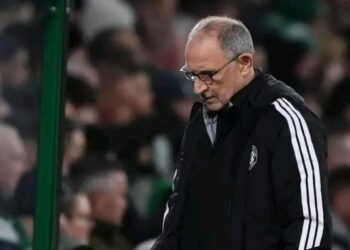
The defeat was Celtic’s third consecutive loss in the Europa League league phase, leaving Martin O’Neill with serious questions to answer as the club attempts to rescue its continental campaign.
MIKA BAUR DOES NOT HIDE FROM CELTIC’S EUROPEAN PROBLEMS
Baur’s post-match comments were striking because they offered a direct assessment of what went wrong.
After Celtic scored, the midfielder believed his team enjoyed a promising spell. However, that positive period quickly disappeared as Celta Vigo began imposing themselves on the contest.
Baur explained that Celtic became too passive, allowed the visitors to dominate around their penalty area and struggled to maintain possession.
He also accepted that the team’s defensive performance was not good enough during the latter stages of the match.
His most revealing assessment came when he was asked why Celtic had lost control.
“I cannot tell you. I’m sorry. I have no idea.”
That response captured the frustration surrounding Celtic’s performance. The players could recognise what had gone wrong, but Baur was unable to identify a clear explanation for why the team had allowed the match to slip away.
For supporters, that uncertainty may be even more worrying than the defeat itself.
Teams can lose matches against strong opposition. What becomes difficult to accept is repeatedly watching familiar weaknesses emerge without an obvious solution.
CELTIC’S SECOND-HALF COLLAPSE WAS DIFFICULT TO EXPLAIN
Celtic entered the second half with renewed hope after Baur scored in the 47th minute.
The goal gave the hosts an advantage they desperately needed after opening their Europa League campaign with defeats against Ferencvaros and Benfica.
For a brief period, Celtic appeared capable of building on their lead. Liam Scales also came close to extending the advantage when his header struck the crossbar.
But the match changed dramatically after the hour mark.
Javi Rodríguez equalised for Celta Vigo in the 68th minute before scoring again just three minutes later. Within a remarkably short period, Celtic had gone from leading the contest to chasing the game.
The speed of the collapse exposed the team’s inability to respond effectively when the momentum shifted.
Instead of slowing the game down, keeping possession and forcing Celta to work for their opportunities, Celtic allowed the visitors to continue applying pressure.
Baur’s assessment reflected that reality. His team had been unable to regain control after scoring, and the consequences were severe.
BAUR IDENTIFIES THE BIGGEST PROBLEM: CELTIC COULD NOT KEEP THE BALL
One of the most important parts of Baur’s interview concerned Celtic’s inability to retain possession.
He argued that after scoring, the team should have kept the ball for longer to take momentum away from Celta Vigo.
That observation highlights a fundamental issue with Celtic’s approach to managing a lead.
Scoring a goal does not automatically mean a team should retreat and defend for the remainder of the match. Against technically capable opposition, surrendering possession can invite wave after wave of attacks.
Keeping the ball serves several purposes. It gives defenders time to recover their positions, allows midfielders to dictate the tempo and forces opponents to expend energy chasing possession.
Celtic struggled to achieve those objectives against Celta Vigo.
Once the visitors began pushing forward, the Hoops found it difficult to establish a rhythm or relieve the pressure on their defence.
Baur acknowledged that Celta were entitled to respond after conceding, but he also believed Celtic should have done more to regain control.
That is a particularly important admission because it suggests the problem was not simply that Celta played well. Celtic also failed to execute the basics required to protect their advantage.
MARTIN O’NEILL MUST FIND ANSWERS BEFORE THE NEXT EUROPEAN TEST
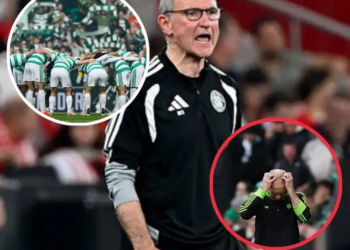
Baur’s comments inevitably increase the scrutiny on O’Neill and his coaching staff.
The manager is responsible for preparing the team, selecting the starting lineup and making tactical adjustments when a match begins to move in the wrong direction.
Celtic’s defeat raises questions about whether the midfield offered enough protection, whether the team had a clear plan for managing its lead and whether changes should have been made earlier.
Those questions deserve serious consideration, particularly because Celtic have now lost three consecutive Europa League matches.
However, responsibility cannot rest entirely with the manager.
Players must also make better decisions on the pitch, particularly when the opposition begins applying pressure. Celtic’s inability to retain possession and defend their advantage involved collective shortcomings that require a collective response.
Baur’s honesty is valuable because he has acknowledged those problems rather than suggesting that the result was simply down to bad luck.
The next step is turning that acknowledgement into improvement.
O’Neill must find a way to ensure Celtic can remain composed after scoring, maintain their defensive organisation and avoid allowing opponents to build momentum so easily.
CELTIC’S EUROPEAN FORM IS BECOMING A SERIOUS CONCERN
Celtic’s latest defeat has intensified concerns about their ability to compete consistently at Europa League level.
The club has considerable domestic expectations, but European competition presents a different challenge. Opponents can punish lapses in concentration, exploit spaces in midfield and turn short periods of dominance into decisive goals.
Celtic experienced all three problems against Celta Vigo.
The team created opportunities and took the lead, but it could not sustain its performance over the full 90 minutes.
That inconsistency has become particularly damaging because Celtic began the league phase with consecutive defeats. Losing again leaves little room for further mistakes.
Baur, however, did not abandon hope of reaching the next round.
He acknowledged that qualification had become more difficult but insisted that games remained and Celtic would continue trying to collect the points required.
That determination is important, but the team’s performances must improve if those ambitions are to remain realistic.
Celtic need more than positive words. They need greater consistency, better possession management and a stronger response when matches become uncomfortable.
IS BAUR’S HONESTY A WARNING SIGN FOR CELTIC?
There are two ways to interpret Baur’s interview.
On one hand, his willingness to acknowledge Celtic’s shortcomings demonstrates accountability. Rather than attempting to defend an unacceptable second-half performance, he openly admitted that his team had been dominated and deserved the outcome based on how it played during the closing stages.
That honesty can provide a starting point for improvement.
On the other hand, his inability to explain why Celtic lost control highlights the scale of the challenge facing the squad.
Recognising a problem is not the same as solving it.
Celtic need to understand why their performances deteriorate after important moments and what changes will prevent the same pattern from repeating.
Is the midfield struggling to retain possession under pressure? Are the defensive lines becoming too deep? Are the players making poor decisions when protecting a lead? Are tactical adjustments arriving too late?
These are the questions O’Neill and his staff must examine.
The answer may involve several factors rather than one simple explanation. But until Celtic identify the underlying causes, the danger of another similar collapse will remain.
CELTIC SUPPORTERS NEED MORE THAN POST-MATCH HONESTY
Baur’s comments may resonate with supporters because they reflect what many saw at Celtic Park.
Celtic had taken the lead, yet they were unable to maintain control when the match entered its decisive period.
The frustration is not simply about losing to Celta Vigo. It is about watching a promising position disappear in a matter of minutes.
Supporters will expect the players and coaching staff to respond with tangible improvements rather than repeating the same explanations after another disappointing European result.
The immediate priority must be restoring confidence and ensuring that Celtic can remain competitive for the entire match.
That means improving possession, making smarter decisions under pressure and showing greater defensive discipline.
It also means recognising that European football demands concentration throughout the contest. A good opening period or an impressive spell after scoring is not enough if the team cannot manage the final stages effectively.
WHAT HAPPENS NEXT FOR MIKA BAUR AND CELTIC?
Baur’s assessment should serve as a starting point for an honest review of Celtic’s European performances.
The midfielder has identified the key issues: passivity, a lack of control in possession and inadequate defending during the second half.
Now Celtic must demonstrate that they can address them.
O’Neill will need to consider whether changes to the midfield balance or tactical approach can help the team maintain possession for longer periods. The players, meanwhile, must show that they can respond to setbacks without allowing the opposition to dictate the match.
Celtic’s remaining European fixtures will demand greater discipline and consistency. Their qualification hopes have taken another serious hit, but Baur’s determination to keep fighting indicates that the squad has not given up.
Ultimately, his most important message was not that Celtic are incapable of competing in Europe. It was that their performance against Celta Vigo was not good enough and that the players must find a way to change it.
Baur’s honesty has exposed the problem. Now Martin O’Neill and his players must find the solution. Celtic cannot afford another night in which a promising position turns into another painful European defeat.





Discussion about this post