

A viral social media post has raised questions about the WNBA’s popularity after claiming that Game 1 of the 2026 Finals recorded the lowest viewership in championship history. But the reported television figures tell a completely different story.
The October 17 matchup between Angel Reese’s Atlanta Dream and the Golden State Valkyries averaged 2.1 million viewers across NBC and Peacock, making it the most-watched WNBA Finals Game 1 ever, according to NBC Sports. The audience was up 11% compared with the opening game of last year’s Finals and peaked at 3 million viewers during the closing minutes.
That directly contradicts the claim circulating in the screenshot. Instead of demonstrating that the league is struggling to attract viewers, the latest figures provide evidence that interest in the WNBA’s championship series remains strong.
THE NUMBERS CONTRADICT THE VIRAL CLAIM
The screenshot attributes the claim to a post by Luna Williams on X, suggesting that the Finals opener between Atlanta and Golden State attracted an historically low audience.
However, NBC Sports’ October 21 announcement reported the opposite.
Game 1 averaged 2.1 million viewers across NBC and Peacock, surpassing the previous Game 1 record based on the audience measurement figures cited by the broadcaster. The game also peaked at 3 million viewers as Golden State closed out its 68-64 victory.
There is an important distinction when comparing television audiences across different years: changes in broadcasters, streaming availability and measurement methods can affect the numbers. Nevertheless, the official figures released for this game do not support the screenshot’s claim that it recorded the lowest viewership ever.
For anyone discussing the WNBA’s popularity, that distinction matters. A viral post can generate debate, but the underlying figures should determine whether its central claim holds up.
ANGEL REESE AND THE ATLANTA DREAM ARE PART OF A COMPELLING FINALS STORY
Atlanta’s appearance in the championship series has given the WNBA another major storyline.
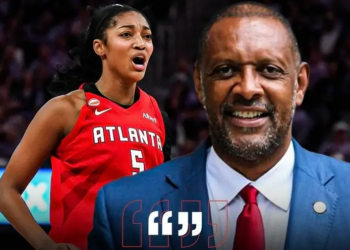
The Dream entered the Finals seeking their first championship after reaching the stage for the first time since 2013. Reese has been an important part of the team’s campaign, bringing rebounding, defensive energy and a high-profile presence to the Atlanta roster.
In Game 1, Reese recorded 14 points and 12 rebounds. Despite her contribution, Atlanta struggled offensively late in the contest and lost 68-64 to the Valkyries.
The defeat did not prevent the matchup from drawing a substantial national audience. In fact, the close finish and Golden State’s late defensive stops helped create a dramatic conclusion.
The broader point is that a player’s popularity and a team’s results cannot be judged solely by one game or one social media reaction. Television audiences, attendance, competitive quality and sustained fan engagement all contribute to the larger picture.
WHY THE WNBA’S VIEWERSHIP DEBATE IS MORE COMPLICATED
Even with record-setting Finals numbers, questions about the WNBA’s ability to maintain its growth are reasonable.
The league operates across multiple television networks and streaming platforms, meaning audiences are not always watching through the same channel. Comparing one broadcast directly with another can therefore produce misleading conclusions unless the platforms and measurement methods are clearly identified.
Scheduling also matters. A game competing with major college football or other prominent sporting events faces a different television environment from a matchup airing during a quieter sports window.
The quality of the game itself is another factor. Game 1 was a defensive battle, with both teams shooting poorly and the outcome remaining uncertain until the final possessions. Some viewers prefer high-scoring contests, while others enjoy the physicality and tactical adjustments that define tightly contested playoff basketball.
These considerations are more useful than simply declaring that the WNBA is either thriving or failing based on one headline.
THE LEAGUE’S BROADER VIEWERSHIP TREND DESERVES ATTENTION
The Game 1 numbers are not the only indication of the WNBA’s growing audience.
The league announced on October 14 that its 2026 regular season reached more than 90 million unique viewers across national networks. It also reported that 51 national telecasts averaged at least one million viewers, the highest number in league history.
Those figures suggest that the league’s challenge is not simply attracting viewers for individual games. It is also about sustaining that interest, making broadcasts easy to find and converting casual viewers into regular fans.
Star players can help drive attention, but long-term growth also depends on compelling rivalries, competitive teams, accessible coverage and effective promotion.
The WNBA must continue building on its momentum rather than assuming that a strong season guarantees future success.
WHAT THIS MEANS FOR ANGEL REESE AND THE WNBA
For Reese, the Finals provide an opportunity to compete for a championship while performing on one of basketball’s biggest stages.
Her presence attracts attention, but the Atlanta Dream’s performance ultimately determines whether the team can turn that attention into a title. After losing Game 1, Atlanta needed to respond on the court rather than become distracted by online arguments about the league’s popularity.
For the WNBA, the record audience offers a positive sign as the championship series continues. It also places greater importance on delivering competitive games and keeping fans engaged through the conclusion of the season.
Criticism and debate are inevitable for a growing sports league. But those discussions are most useful when they begin with accurate information.
FINAL VERDICT: THE VIRAL CLAIM DOES NOT MATCH THE OFFICIAL FIGURES
The claim that Game 1 of the 2026 WNBA Finals recorded the lowest viewership ever is contradicted by the figures announced by NBC Sports.
The Atlanta Dream-Golden State Valkyries matchup averaged 2.1 million viewers across NBC and Peacock, making it the most-watched WNBA Finals opener according to the broadcaster’s reported measurements. The audience peaked at 3 million during the game’s closing minutes.
That does not mean the WNBA has no challenges or that every game will attract a record audience. It does mean the screenshot should not be treated as evidence of declining Finals viewership.







Discussion about this post