

The Philadelphia Phillies are making major changes after another disappointing postseason, and two longtime coaches are reportedly on their way out. Could these departures be the first step toward a much-needed turnaround in 2027?
The Philadelphia Phillies are reportedly preparing for a significant coaching staff shake-up after deciding to bring back Don Mattingly as their manager.
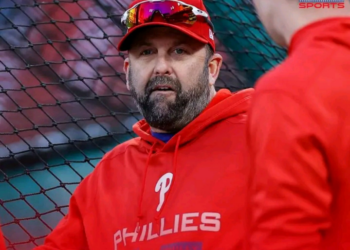
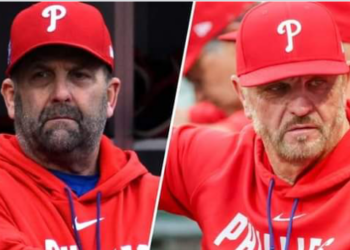
According to a report by NBC Sports Philadelphia’s Jim Salisbury, the Phillies will not retain hitting coach Kevin Long or infield coach Bobby Dickerson. The reported decisions come after Philadelphia struggled offensively and defensively during the 2026 season, raising questions about whether the team’s current approach is good enough to deliver another championship.
Both coaches have played important roles in the Phillies’ recent success. However, with expectations remaining high in Philadelphia, the organization appears ready to make difficult decisions as it begins preparing for the 2027 campaign.
WHY THE PHILLIES ARE REPORTEDLY MAKING CHANGES
The Phillies entered the 2026 season with championship ambitions, but their performance ultimately fell short of expectations.
While the team has remained competitive in recent years, its postseason struggles have become increasingly difficult to ignore. Philadelphia’s offense has repeatedly gone quiet at critical moments, and the team’s latest regular-season performance created even more concerns.
The numbers provide some context for the reported coaching changes.
According to Phillies Nation, Philadelphia finished each of Kevin Long’s first four seasons with the organization ranked among the top 10 MLB teams in OPS. In 2026, however, the Phillies dropped to 22nd in baseball with a .707 OPS.
That decline represents a substantial problem for a team built around established offensive stars.
The Phillies have invested heavily in their lineup, and the expectation is that a group featuring players such as Bryce Harper, Trea Turner and Kyle Schwarber should consistently produce at a high level.
When those expectations are not met, the coaching staff naturally comes under scrutiny.
Still, coaching changes alone will not solve every problem. Philadelphia must also determine whether its struggles stemmed from hitting instruction, player performance, roster construction or a combination of all three.
KEVIN LONG’S DEPARTURE WOULD MARK THE END OF AN IMPORTANT ERA
Kevin Long joined the Phillies before the 2022 season and became an important figure in the development of the team’s offense.
His track record included helping Kyle Schwarber rediscover his power production during their time with the Washington Nationals. When Schwarber joined Philadelphia the following year, the two reunited, and the slugger continued establishing himself as one of baseball’s most dangerous power hitters.
Schwarber’s success also demonstrated why Long remained a valued member of the organization for so long.
According to the original report, Schwarber advocated for the Phillies to retain Long after the 2025 season when the hitting coach was a free agent.
That detail makes the reported decision particularly interesting. When one of the team’s most productive hitters has confidence in a coach, moving on from that coach is not necessarily an easy choice.
Long also has an impressive postseason résumé. He was part of the New York Yankees’ 2009 World Series championship team and the Washington Nationals’ 2019 championship club.
His experience should make him an attractive candidate for other organizations looking to improve their offensive approach.
However, past success does not guarantee future results.
The Phillies’ declining offensive production in 2026, combined with their inability to consistently deliver in the postseason, appears to have pushed the organization toward a new direction.
My take: Long’s reported departure should not automatically be interpreted as proof that he was the primary cause of Philadelphia’s offensive struggles. Hitters must execute, and even experienced coaches cannot guarantee consistent production. Nevertheless, a team that falls from the top 10 in OPS to 22nd has legitimate reasons to reconsider its offensive philosophy.
The Phillies’ next hitting coach will face enormous pressure to get the lineup back on track.
BOBBY DICKERSON’S EXIT RAISES QUESTIONS ABOUT INFIELD DEFENSE
Dickerson’s reported departure is equally significant because of the defensive improvements he helped oversee during his time in Philadelphia.
He first joined the Phillies as their infield coach in 2019. After leaving to become the San Diego Padres’ bench coach, he returned to Philadelphia following two seasons in San Diego.
During his second stint with the organization, Dickerson worked with several important players.
Alec Bohm made considerable progress defensively at third base, while Trea Turner delivered a strong 2025 season at shortstop that earned him MVP votes.
Dickerson also helped oversee Bryce Harper’s transition from the outfield to first base. Meanwhile, Bryson Stott developed into a dependable defender capable of contributing at multiple infield positions.
Those accomplishments make the reported decision to move on from Dickerson noteworthy.
However, the 2026 season brought defensive concerns of its own. Philadelphia struggled to maintain the same level of consistency in the infield, adding to the organization’s reasons to consider changes.
The challenge for the Phillies will be determining whether those struggles were primarily coaching-related or whether personnel, injuries and individual mistakes played a larger role.
A new infield coach will need to establish clear defensive expectations while helping the team’s players maintain consistency throughout a long season.
Philadelphia cannot afford to give away unnecessary outs, particularly against strong postseason opponents.
DON MATTINGLY NOW FACES AN IMPORTANT DECISION
The reported departures place additional responsibility on Mattingly as he prepares to lead the Phillies into 2027.
With the organization committing to Mattingly as its manager, the next step is assembling a coaching staff capable of addressing the weaknesses that contributed to the team’s disappointing finish.
The manager’s choices will matter because Philadelphia does not need a complete rebuild. It needs a team that can maximize the talent already on its roster while correcting the issues that have prevented it from reaching its ultimate goal.
The new hitting coach must help the offense become more consistent, especially in high-pressure situations.
The replacement for Dickerson will need to improve defensive reliability without sacrificing the versatility that players such as Stott provide.
Mattingly must also ensure that the new coaches can communicate effectively with established veterans and younger players alike.
A coaching change can provide a fresh perspective, but it also introduces uncertainty. Players must adapt to different methods, terminology and expectations.
The Phillies will need to make sure the transition strengthens the team rather than creating additional disruption.
COULD THE PHILLIES TARGET EXPERIENCED COACHES?
The Phillies have several important decisions to make as they build their coaching staff for 2027.
For the hitting coach position, the organization should prioritize someone with a proven ability to help hitters make adjustments throughout the season.
Philadelphia’s problem is not simply a lack of power. The team needs a more reliable offensive approach that can produce runs against different pitching styles, particularly when opposing teams have elite starters available in October.
That means evaluating plate discipline, swing decisions, situational hitting and the ability to capitalize on scoring opportunities.
For the infield coach role, Philadelphia should seek someone who can strengthen fundamentals while continuing to develop versatile defenders.
The club also needs to evaluate its defensive personnel honestly. If certain players are struggling because of positioning, communication or execution, the new staff must identify those problems early.
Hiring recognizable names may generate headlines, but the best choices will be coaches whose methods fit the roster and address the Phillies’ specific weaknesses.
WILL THESE CHANGES FINALLY FIX PHILADELPHIA’S POSTSEASON PROBLEMS?
The biggest question surrounding the Phillies is whether changing two coaches will be enough to improve their postseason results.
Philadelphia has assembled a talented roster, but talent alone does not guarantee a championship.
The postseason exposes weaknesses that can remain hidden during the regular season. Opposing teams exploit unfavorable matchups, pitchers challenge hitters differently, and every defensive mistake becomes more costly.
The Phillies need an offense that can manufacture runs when home runs are not available. They also need a defense that can consistently convert routine opportunities into outs.
Those improvements will require more than replacing two members of the coaching staff.
The front office must assess the roster, the players must take responsibility for their performance, and the new coaches must develop a system that works under pressure.
There is also a risk that the Phillies could overreact to one disappointing season. Long and Dickerson have both contributed to meaningful player development, and their previous accomplishments should not be dismissed simply because the team struggled in 2026.
Nevertheless, the organization cannot ignore declining results while expecting the same approach to produce a different outcome.
My prediction: The Phillies will prioritize an experienced hitting coach who can work with their established stars while introducing a more consistent offensive approach. The infield coaching search will likely focus on fundamentals and defensive accountability. If those hires are supported by smart roster decisions, Philadelphia could enter 2027 better equipped to compete for a championship.
WHAT THIS MEANS FOR THE PHILLIES’ 2027 CHAMPIONSHIP HOPES
The reported departures of Long and Dickerson signal that Philadelphia is willing to make changes rather than simply run back the same coaching staff.
That is an important message for a team whose championship window remains a central focus.
The Phillies do not necessarily need to tear apart their roster. However, they must identify why their offense declined, why their defense struggled and why their postseason performances have repeatedly fallen short of expectations.
Mattingly’s leadership will be central to that process.
His coaching appointments could influence the team’s offensive identity, defensive consistency and preparation for high-pressure games. The wrong hires could leave Philadelphia facing the same problems next October, while the right ones could help unlock more production from an already talented roster.
For now, the reported departures represent the beginning of a potentially important offseason.
The Phillies’ next moves will determine whether these changes become a meaningful step toward contention or simply another attempt to fix deeper problems with new names.
Philadelphia fans have every reason to demand improvement. After investing so much in building a championship-caliber team, the organization must show that it understands what went wrong and has a credible plan to correct it.
The bottom line: Kevin Long and Bobby Dickerson reportedly will not return to the Phillies’ coaching staff, but their replacements will ultimately be judged by one thing: whether Philadelphia can turn its talent into more consistent regular-season production and better postseason results.



Discussion about this post