

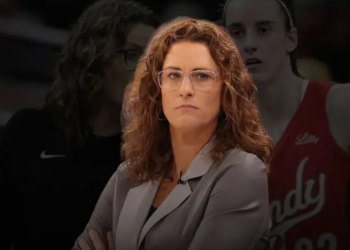
Caitlin Clark’s relationship with Indiana Fever head coach Stephanie White is back in the spotlight after sweeping changes at the top of the franchise left the team’s future direction uncertain.
The Fever’s 2026 season ended earlier than many expected, with Indiana suffering a first-round playoff exit against the Las Vegas Aces. Now, the organization is preparing for a pivotal offseason after team president Kelly Krauskopf stepped down and general manager Amber Cox was dismissed on October 23.
Those departures have raised questions about whether additional changes could follow, including the future of White, who remains the Fever’s head coach for now, according to reporting by the Indianapolis Star.
But one important voice in this conversation is Clark herself.
The Fever superstar has publicly expressed appreciation for White, defended their relationship during previous controversies, and emphasized that the team’s shortcomings cannot automatically be blamed on its coaching staff.
Clark’s comments offer a more complicated picture than the idea that she either wants White fired or is demanding that she stay.
WHAT CAITLIN CLARK ACTUALLY SAID ABOUT STEPHANIE WHITE
During her end-of-season media availability in October, Clark made it clear that she appreciates White and the support she has received from her coach.
According to the Indianapolis Star, Clark described White as someone who has consistently supported her and said she had enjoyed playing for her.
Clark also pushed back against the tendency to attribute disappointing team results exclusively to coaching.
She explained that when players fail to meet expectations, responsibility does not automatically rest with the coaching staff. Players must also perform better, while the organization has other areas that need evaluation.
That message matters because Clark’s words are being examined during a period of uncertainty for the franchise.
However, there is a distinction between praising a coach and publicly campaigning for that coach to keep her job.
Clark’s remarks demonstrate appreciation and respect. They do not, by themselves, establish whether she privately wants White to return next season.
The star guard has not publicly made a definitive demand that the Fever retain White. Nor do her comments establish that she wants the coach replaced.
Without additional evidence, claims about Clark’s private position would be speculation.
THE FRONT-OFFICE SHAKE-UP HAS CHANGED THE CONVERSATION
The Fever’s leadership changes have created an important turning point for the franchise.
Krauskopf’s departure ended her latest period leading the organization, while Cox’s dismissal opened another major position in the front office. The changes came after Indiana’s early postseason exit and a season in which the team struggled to meet championship expectations.
The next leadership group will inherit several significant decisions.
Indiana must determine how to strengthen the roster, improve its defense, manage free agency, and build a team capable of making a deeper playoff run.
The coaching question is closely connected to those responsibilities.
A new front-office leader may prefer to evaluate the existing coaching staff before deciding whether a different approach is necessary. Alternatively, the franchise could conclude that continuity with White offers the best chance of building on the team’s strengths.
Neither outcome is guaranteed.
For Clark, the quality of those decisions could have consequences well beyond the coaching debate. She needs a roster and system that allow her to use her playmaking ability while giving Indiana a realistic path toward championship contention.
WHY CLARK’S SUPPORT FOR WHITE MATTERS
Clark’s public comments are particularly significant because the relationship between the two has previously become a major topic of discussion among fans.
In May, a heated exchange between Clark and White during a game against Portland circulated widely online. Clark subsequently rejected the idea that the moment represented a serious breakdown in their relationship.
She described it as a competitive interaction between two people who wanted to win and said White had her back.
That episode illustrated how quickly ordinary coaching interactions can become major controversies when Clark is involved.
The Fever guard is one of the most closely watched players in women’s basketball. Her reactions, comments, and interactions with teammates and coaches frequently receive attention beyond the immediate basketball context.
As a result, even a routine coaching disagreement can be interpreted as evidence of a deeper problem.
Clark’s public defense of White offered an important reminder: a competitive exchange does not necessarily mean a player has lost confidence in her coach.
Her end-of-season comments reinforced that broader message.
Still, support for a coach does not mean a player believes every decision was correct. Clark can appreciate White while recognizing that the team must improve.
WHITE’S RECORD OFFERS REASONS FOR BOTH SIDES OF THE DEBATE
White’s future cannot be evaluated solely through Clark’s comments.
The coach led Indiana to the semifinals in 2025, despite significant injury problems, before the Fever exited in the first round in 2026. The team also established a franchise record for regular-season wins in 2026, according to recent reporting.
Those accomplishments provide an argument for continuity.
White has experience coaching Clark and working with Indiana’s core players. Retaining that familiarity could help the franchise avoid another period of adjustment while the front office works to improve the roster.
However, the disappointing playoff result creates legitimate questions.
Indiana struggled defensively and failed to advance beyond the opening round. A franchise with championship ambitions cannot ignore those shortcomings simply because the offense produced impressive results.
The front office must determine how much responsibility belongs to the coaching staff, how much reflects roster construction, and whether a different coach could improve the team’s postseason performance.
That evaluation should include White’s tactical decisions, player development, rotations, and ability to adjust against elite opponents.
Clark’s appreciation for White should be part of the discussion, but it should not be the only factor determining the franchise’s decision.
WOULD REPLACING WHITE HELP CAITLIN CLARK?
Changing coaches can provide a fresh start, but it does not guarantee better results.
A new coach might introduce a system better suited to Clark’s strengths, establish different defensive principles, or create a more effective balance between the team’s leading scorers.
But a coaching change could also introduce uncertainty.
Players would need to learn new expectations, adjust to different offensive terminology, and build relationships with a new staff. If Indiana’s main problems stem from roster weaknesses, changing coaches without improving the personnel might produce limited results.
The Fever need to determine what kind of basketball identity they want to establish around Clark.
That means building an offense that maximizes her playmaking, maintaining enough scoring support to prevent opponents from focusing exclusively on her, and improving the defense enough to compete with the league’s strongest teams.
Whether White is the right person to lead that process remains an open question.
The strongest argument for keeping her is continuity and the team’s demonstrated offensive potential. The strongest argument for change is the need to address persistent weaknesses and ensure that the franchise does not waste another season of championship opportunity.
Both positions deserve consideration.
KELSEY MITCHELL’S FUTURE ADDS ANOTHER LAYER OF UNCERTAINTY
The coaching decision is only one part of Indiana’s offseason challenge.
Kelsey Mitchell, one of the Fever’s most important offensive players, is approaching free agency and has indicated she intends to explore her options. Her decision could significantly affect the team’s ability to maintain its scoring strength while addressing its defensive needs.
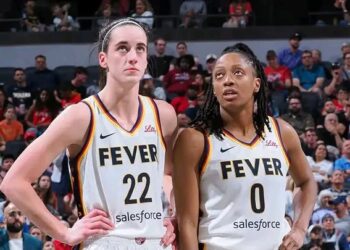
If Mitchell returns, Indiana will have a familiar scoring core around Clark and Aliyah Boston.
If she leaves, the Fever will face the difficult task of replacing her production while deciding how to allocate their available resources.
That decision could influence the coaching discussion.
A new coach might have a different vision for how Clark, Boston, and Mitchell should share offensive responsibilities. White, meanwhile, already understands the existing roster and the relationships among its key players.
The front office must consider how coaching, player retention, and roster construction fit together.
Making one decision without considering the others could leave Indiana with a mismatched roster or an unclear playing identity.
For Clark, the most important outcome is not necessarily the return of one particular coach. It is having an organization that makes sound decisions and builds a team capable of winning at the highest level.
THE BIG QUESTION: WILL THE FEVER LISTEN TO CAITLIN CLARK?
Clark’s importance to Indiana is undeniable, and the organization has strong reasons to consider her perspective when evaluating its next steps.
She is central to the team’s future, its offensive identity, and its competitive ambitions. A front office that understands her strengths and communicates effectively with her will be better positioned to build a successful roster.
But listening to Clark is not the same as allowing one player’s preference to determine every organizational decision.
The Fever must weigh the opinions of their players alongside coaching evaluations, roster needs, financial considerations, and long-term planning.
Clark’s public comments suggest that she values White and recognizes that the team’s shortcomings cannot be attributed to coaching alone.
That is a useful perspective as Indiana begins evaluating what went wrong.
It does not resolve the coaching question, but it does challenge simplistic narratives that portray Clark as openly campaigning against White.
Until Clark or the organization makes a clearer statement, claims about her private wishes should be treated cautiously.
FINAL VERDICT: CAITLIN CLARK HAS PRAISED WHITE, BUT THE FEVER’S NEXT MOVE REMAINS UNCERTAIN
The Indiana Fever are entering a defining offseason.
The departures of Krauskopf and Cox have created a new leadership landscape, while White’s future remains unresolved. At the same time, Mitchell’s free agency and the need to improve the roster will place enormous pressure on the franchise’s next decisions.
Clark has publicly expressed appreciation for White and pushed back against the idea that the coach should shoulder all the blame for the team’s disappointing results.
Those comments deserve attention, but they should not be exaggerated into an endorsement of every coaching decision or a demand that White remain in charge.
The Fever must make their decision based on a comprehensive evaluation of the team’s performance and future needs.
If White returns, she will need to address the team’s defensive shortcomings and help Indiana turn its offensive potential into postseason success. If the franchise chooses a different coach, that hire must offer a credible plan for maximizing Clark’s abilities and building a championship-caliber roster.







Discussion about this post