

Britain could be preparing for a major change in how it defends itself, with government plans for a potential new Home Guard-style force raising questions about the role ordinary citizens might play if the country faces a major military crisis.
The proposed Home Defence Programme (HDP) would bring civilian and military resources together to strengthen Britain’s resilience during a conflict. Among the ideas outlined in the government’s Strategic Defence Review is a locally recruited volunteer force that could help protect critical national infrastructure, including energy facilities, telecommunications networks, water supplies and food production.
The proposals come as military leaders increasingly stress the need for the public to understand the security threats facing the United Kingdom.
However, there is an important distinction between preparing civilians to support national defence and compelling them to serve in the armed forces. The proposals described in the October 20 report do not establish that Britain has introduced military conscription or ordered civilians to join a new Home Guard.
Instead, the emerging plans raise a broader question: how far should Britain go in preparing its population for the possibility of a major international conflict?
BRITAIN CONSIDERS A MODERN VERSION OF THE HOME GUARD
The idea of a new Home Guard has attracted attention because it recalls one of the most recognizable periods in British military history.
During the Second World War, Britain established the Home Guard in 1940 to provide an additional line of defence against the threat of a German invasion.
Thousands of men who were not eligible for regular military service volunteered to support the country’s defence. Their duties included guarding important locations and preparing to resist an invasion.
The force later became familiar to generations of television viewers through the BBC comedy Dad’s Army, which portrayed the experiences of a fictional group of Home Guard volunteers.
Today’s proposals, however, reflect a very different security environment.
Rather than simply preparing for a conventional invasion, modern defence planning must account for threats to infrastructure, communications, energy networks and other systems on which the country depends.
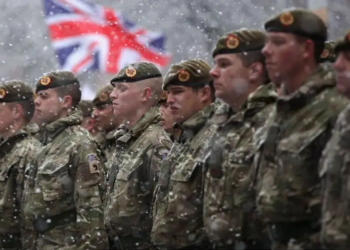
A new volunteer force could therefore have a role in supporting military personnel and protecting strategically important locations during a crisis.
The government’s Strategic Defence Review suggested that such a force could be modelled on the Reserves and led by the Army.
But the precise structure, recruitment arrangements, training requirements and operational responsibilities would need to be established before the full implications become clear.
WHY THE BRITISH ARMY WANTS THE PUBLIC TO PLAY A GREATER ROLE
Britain’s military leadership has increasingly emphasized that national defence cannot depend on regular armed forces alone.
According to the Daily Express report, General Sir Roly Walker, the head of the British Army, recently told troops at Catterick Garrison that political leaders would need to have an honest conversation with the public about the risks facing the country.
He argued that British citizens would be asked to play a part in national defence and that the military would need public support as it prepared to confront potential threats.
His remarks reflect a wider debate about how prepared the United Kingdom is for a prolonged crisis.
Modern conflicts can affect far more than the soldiers fighting on the front lines. Disruption to electricity supplies, communications networks, transport systems and food distribution can have serious consequences for the civilian population.
Protecting those systems requires cooperation between government departments, private companies, local authorities, emergency services and the military.
A larger role for trained civilian volunteers could help support that effort.
However, it would be premature to assume that every citizen would be expected to perform a military role. The specific responsibilities of any future Home Defence Programme would depend on the government’s final decisions.
DOES THE NEW HOME GUARD MEAN BRITAIN IS PREPARING FOR WORLD WAR THREE?
The possibility of a new Home Guard-style force has inevitably intensified public discussion about World War Three.
Russia’s war against Ukraine, continuing instability in the Middle East and wider tensions between major powers have forced European governments to reconsider their defence arrangements.
Britain is no exception.
Military planners must consider scenarios that range from cyberattacks and sabotage to attacks on infrastructure and a wider military confrontation involving NATO countries.
Preparing for those possibilities does not mean that a world war is inevitable.
Governments routinely develop contingency plans for events they hope will never happen. Emergency planning, military exercises and infrastructure protection are intended to reduce vulnerability if a crisis occurs.
Nevertheless, the renewed emphasis on national resilience suggests that British defence planning is increasingly focused on the possibility that a major conflict could affect civilian life at home.
For ordinary people, the practical implications may include greater attention to emergency preparedness, the protection of essential services and cooperation between civilian institutions and the armed forces.
The central message is not that Britain has confirmed an imminent war, but that its defence establishment wants the country to be better prepared for serious security threats.
THOUSANDS OF VOLUNTEERS COULD HELP PROTECT CRITICAL INFRASTRUCTURE
One of the most significant aspects of the proposed programme is the possibility of recruiting volunteers to help protect critical national infrastructure.
The Strategic Defence Review identified essential sectors such as energy, telecommunications, food production and water as areas requiring stronger protection.
These systems are fundamental to everyday life.
Electricity networks support hospitals, homes and businesses. Telecommunications enable emergency services and government agencies to communicate. Water systems are essential to public health, while food distribution networks help keep shops and households supplied.
A major disruption to any of these services could create widespread problems, even without a conventional military attack on British territory.
A locally recruited volunteer force could potentially help safeguard designated sites, support security arrangements and provide assistance during emergencies.
The review also raised the possibility that volunteers could receive basic communications equipment and drones, with some proposals contemplating armed personnel.
Those details should be understood as elements of the proposals described in the review, not proof that a fully equipped force has already been established.
Any armed volunteer arrangement would require clear rules governing recruitment, training, command, accountability and the use of force.
The government would also need to determine how volunteers would work alongside police, regular soldiers and existing reserve personnel.
The success of such a programme would depend on careful planning rather than simply recruiting large numbers of people.
CONSCRIPTION FEARS ARE GROWING, BUT THERE IS NO CONFIRMED RETURN TO NATIONAL SERVICE
For many people, the words World War Three immediately raise fears that governments could introduce compulsory military service.
That concern is understandable when military leaders discuss the need for the public to make sacrifices and play a role in defending the country.
However, the Home Defence Programme described in the report should not be confused with a confirmed conscription policy.
The proposals focus on improving cooperation between civilian and military organizations and potentially creating a volunteer force to protect critical infrastructure.
They do not, in themselves, establish that the government intends to compel ordinary citizens to join the Army.
There is also an important difference between military conscription and wider national preparedness.
A government can encourage people to learn emergency procedures, strengthen infrastructure protection and volunteer for specific responsibilities without requiring every citizen to become a soldier.
The details of any future programme will matter enormously.
Until ministers publish definitive arrangements, claims that Britain is preparing to draft thousands of civilians into compulsory military service would go beyond the evidence in the report.
For now, the clearest development is the growing emphasis on preparing the country for a range of potential security emergencies.
FORMER SECURITY ADVISER WARNS THAT BRITAIN MUST BE MORE HONEST ABOUT THE RISK
The debate has also attracted attention from former senior national security officials.
According to the Daily Express, former national security adviser Lord Peter Ricketts told the BBC that ministers needed to do more to inform the public about the threat posed by Russia.
His warning reflects a difficult challenge for political leaders.
Governments must communicate genuine security concerns without creating unnecessary panic. If they understate the risks, citizens and businesses may be inadequately prepared. If they exaggerate the danger, they could fuel fear and confusion.
Public communication is therefore an important part of national resilience.
People need to understand which threats are considered credible, what the government is doing to reduce those risks and what practical steps individuals can take to prepare.
That conversation should be based on evidence and clearly distinguish between current threats, possible future scenarios and worst-case contingency planning.
Britain’s defence debate is unlikely to become less important as European governments reassess their military capabilities and their ability to withstand prolonged disruption.
HOW WOULD A NEW HOME GUARD DIFFER FROM THE REGULAR ARMY?
A modern Home Guard-style force would not necessarily have the same responsibilities as regular soldiers.
The Army’s primary role includes preparing for and conducting military operations, both at home and overseas, in accordance with government policy.
A civilian volunteer force focused on national resilience could have a narrower mission, concentrating on designated infrastructure and providing support during emergencies.
Its responsibilities might include assisting with site security, supporting communications or helping authorities maintain essential services during a crisis. The precise duties would depend on the programme’s final design.
The distinction matters because protecting a power station during an emergency is not the same as deploying a combat unit to a battlefield.
Training requirements, equipment, command arrangements and legal responsibilities would differ depending on the role.
A volunteer force could potentially free regular military personnel to concentrate on tasks that require specialist military training.
But the programme would also create practical challenges.
Volunteers would need sufficient training to carry out their duties safely. Authorities would need to establish who could direct them, what powers they would possess and how they would be held accountable.
The government would also need to consider how volunteers could balance their duties with their normal employment and family responsibilities.
Without clear answers to those questions, it is difficult to determine how large or effective a new force could become.
WHAT WOULD THIS MEAN FOR ORDINARY BRITISH CITIZENS?
For most people, the immediate significance of the proposals is not that they are about to be called into military service.
It is that national defence is increasingly being discussed as a responsibility involving the wider population, not just professional soldiers.
That approach could lead to more public information about emergency preparedness, greater cooperation between local authorities and essential-service providers, and new opportunities for people who want to volunteer.
It could also prompt debate about how much responsibility governments should place on civilians during a national emergency.
Some people may welcome the opportunity to contribute to national security. Others may worry about the time, expense and potential risks involved.
Those concerns deserve consideration before any new force is introduced.
A well-designed programme would need to explain how volunteers would be recruited, trained, protected and supported. It would also need to ensure that participation was genuinely voluntary if the force were established on that basis.
For households already dealing with the cost of living, it would be important to understand whether participation would involve expenses, compensation or time away from employment.
The government would also need to explain how the proposed force would fit alongside existing emergency services and military reserves.
The more clearly those arrangements are communicated, the easier it will be for the public to distinguish a practical defence initiative from frightening speculation about compulsory service.
WHY BRITAIN’S CRITICAL INFRASTRUCTURE HAS BECOME A DEFENCE PRIORITY
Modern countries depend on interconnected systems that can be vulnerable to disruption.
A cyberattack against a major service provider, damage to energy infrastructure or interference with communications could affect millions of people without an invading army crossing the country’s borders.
That makes infrastructure protection a central part of contemporary national security.
The effects of a serious disruption could spread quickly. Hospitals may depend on reliable power, businesses need communications to operate, and transport networks rely on complex systems that require constant coordination.
A prolonged interruption could also complicate the work of emergency services and make it harder for government agencies to respond to a crisis.
Strengthening those systems therefore involves more than military personnel.
It can require investment in cybersecurity, physical protection, backup systems, emergency planning and cooperation between public authorities and private companies.
A volunteer force could contribute to some aspects of that effort, but it would not replace the need for technical expertise and investment in resilient infrastructure.
The government will need to demonstrate how the Home Defence Programme would complement those existing responsibilities rather than duplicate them.
COULD THE PLANS CHANGE BRITAIN’S RELATIONSHIP WITH NATIONAL DEFENCE?
The proposals could signal a broader shift in how Britain thinks about security.
For decades, many people have viewed military defence as the responsibility of professional armed forces, with civilian involvement largely limited to emergency services, reservists and specialist support.
A new Home Defence Programme could encourage a wider understanding of national resilience, in which businesses, local communities and volunteers play more visible roles.
That does not necessarily mean returning to the social conditions of the Second World War.
Modern threats are different, and any new arrangements would need to reflect today’s laws, technology, economy and democratic expectations.
However, the debate could change how people think about their own role in protecting the country.
The government may increasingly encourage citizens to understand emergency procedures, recognize the importance of essential infrastructure and consider whether volunteering could support national preparedness.
Whether that becomes a large-scale initiative or remains a more limited programme will depend on decisions still to be made.
FINAL VERDICT: BRITAIN IS PLANNING FOR GREATER RESILIENCE, NOT CONFIRMED MASS CONSCRIPTION
Britain’s proposed Home Defence Programme has brought renewed attention to the country’s preparations for a potential major conflict.
The plans outlined in the Strategic Defence Review include stronger civilian-military cooperation and the possibility of recruiting volunteers to help protect critical national infrastructure.
The remarks from General Sir Roly Walker and Lord Peter Ricketts have added urgency to the debate, emphasizing the importance of public awareness and national preparedness.
But the distinction between preparation and imminent war remains essential.
There is no confirmation in the report that Britain has introduced compulsory military service or that ordinary citizens are about to be drafted into a new Home Guard.
The proposal is still evolving, and important details concerning recruitment, responsibilities, training and command arrangements remain to be established.
For the British public, the most important questions are what the programme will actually involve, whether participation will be voluntary and how the government intends to protect essential services during a serious crisis.
Britain is clearly giving greater attention to national resilience. Whether the proposed Home Guard-style force becomes a major part of that strategy will depend on the government’s next decisions.






Discussion about this post