

Prince Harry and Meghan Markle are facing renewed scrutiny over their departure from royal duties after a friend reportedly claimed that the couple never agreed with Queen Elizabeth II’s decision to reject their proposed “half-in, half-out” arrangement.
The latest revelations have reignited one of the British royal family’s most enduring controversies, raising fresh questions about the Sussexes’ relationship with the monarchy and whether the disagreement that shaped their lives in 2020 was ever truly resolved.
According to a report published by PEOPLE on October 19, 2026, a friend of the Duke and Duchess of Sussex told Hello! that the couple never agreed that they could not combine royal responsibilities with independent commercial activities. The source described the arrangement ultimately imposed on them following the Sandringham Summit as something that was “foisted upon them.”
The comments have attracted attention because they challenge the perception that Harry and Meghan simply accepted the terms of their departure and moved on.
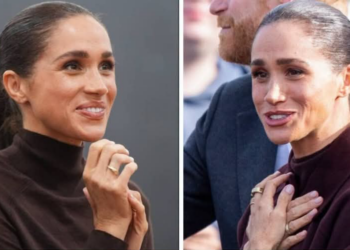
The controversy comes shortly after the couple returned to Nottingham for joint charity visits, their first major joint public outing in the United Kingdom since their reported return for an extended period.
Although the visit was presented as an opportunity to support charitable organisations, it has also brought renewed attention to the complicated relationship between the Sussexes and the royal institution they stepped away from.
The biggest question is whether Harry and Meghan want a different relationship with the monarchy or simply want greater recognition that leaving official royal duties did not erase their royal identities.
HARRY AND MEGHAN’S ROYAL EXIT IS BACK IN THE SPOTLIGHT
When Prince Harry and Meghan announced in January 2020 that they intended to step back as senior members of the royal family, the decision sent shockwaves through the monarchy.
The couple wanted greater independence and the ability to pursue professional and charitable interests outside the traditional royal structure. However, their proposed arrangement raised difficult questions about how they would balance those ambitions with their status as members of the royal family.
The central disagreement concerned whether they could remain connected to royal duties while also pursuing independent commercial activities.
Queen Elizabeth II ultimately rejected the proposed half-in, half-out arrangement. Following discussions at the Sandringham Summit, the couple stepped away from their official royal responsibilities.
The latest report suggests that the decision was not necessarily accepted in the way some observers might have assumed.
A friend quoted by Hello! claimed that Harry and Meghan never agreed that they should be prevented from pursuing a hybrid arrangement. According to the source, the decision was made for them rather than mutually negotiated to their satisfaction.
It is important to recognise that these comments were attributed to a friend, rather than presented as a direct statement from Harry or Meghan. The account provides insight into how someone close to the couple reportedly views the dispute, but it does not independently establish every detail of the private discussions.
Nevertheless, the claim has revived a fundamental question about the Sussexes’ departure: Did they want to leave royal life, or did they want to change the rules governing their participation in it?
The distinction matters because the two positions would have led to very different outcomes.
WHY QUEEN ELIZABETH REJECTED THE HALF-IN, HALF-OUT ARRANGEMENT
To understand the continuing controversy, it is necessary to look beyond the personalities involved.
The disagreement was not simply about how often Harry and Meghan would appear at royal events. It concerned the relationship between royal status, official responsibilities, public representation and private commercial interests.
Working members of the royal family undertake engagements associated with the monarchy. Their activities can carry institutional significance because they represent the Crown, support official causes or fulfil responsibilities connected to their positions.
Private commercial work operates differently.
Allowing individuals to represent the monarchy while simultaneously pursuing independent business interests could create questions about conflicts of interest, accountability and the use of royal status in commercial settings.
From the institution’s perspective, establishing a clear boundary between those roles offered a way to protect the monarchy’s structure and public standing.
Queen Elizabeth’s decision therefore reflected a broader institutional concern about maintaining a distinction between official royal duties and private activities.
For Harry and Meghan, however, the arrangement may have represented a restriction on the independence they were trying to establish.
The latest claim suggests that the source believes the couple never accepted the final decision as their preferred outcome.
That does not automatically mean they now want to return to their former roles. Nor does it establish that they are seeking a formal reversal of the arrangement.
Instead, it highlights how two different expectations can persist long after an official decision has been made.
The monarchy established a boundary. The Sussexes, according to the friend quoted in the report, may never have considered that boundary a fair reflection of what they originally wanted.
THE PHRASE HARRY AND MEGHAN REPORTEDLY DISLIKE
Another part of the controversy concerns the language used to describe the couple.
According to PEOPLE, a friend speaking to The Times said Harry and Meghan dislike the phrase “working members of the royal family.”
The source reportedly argued that the couple does not work for the royal institution, but they remain members of the royal family and continue to undertake work of their own.
The same source indicated that the Sussexes also dislike being described as “former royals.”
At first glance, the disagreement might appear to be a debate over terminology. However, the language used to describe Harry and Meghan carries broader implications for how the public understands their status.
The phrase “working royal” generally refers to someone who undertakes official duties on behalf of the monarchy. It does not necessarily describe every member of the royal family.
Harry remains the son of King Charles III, while Meghan remains his wife. Their departure from official royal duties did not erase those family relationships.
At the same time, their continued royal connections do not automatically make their independent charitable or commercial activities official engagements.
This distinction is at the heart of the disagreement.
For supporters of the monarchy, the terminology helps establish clear boundaries between individuals who formally represent the institution and those who operate independently.
For supporters of Harry and Meghan, the same language may appear to diminish their ongoing family connections and the work they undertake outside the royal structure.
Both perspectives help explain why a seemingly simple label can become the focus of a much larger public argument.
Ultimately, the official distinction between royal membership and royal duties remains more meaningful than any particular phrase.
KING CHARLES’ POSITION COULD COMPLICATE THE DEBATE
The controversy has also resurfaced against the backdrop of a reported communication from King Charles concerning Harry and Meghan’s status.
According to the supplied PEOPLE report, a letter issued through the Lord Chamberlain reiterated that there had been no change to the couple’s position as non-working members of the royal family.
The letter reportedly stated that their charitable activities are undertaken in a personal capacity rather than on behalf of the Crown.
A source close to Harry and Meghan pushed back against describing them as private citizens, arguing that their public profiles make an ordinary private life unrealistic.
That response highlights a tension that the royal family cannot easily resolve.
Harry and Meghan are internationally recognised public figures. Their appearances can attract significant media attention, and their royal connections remain central to public interest in their lives.
However, public recognition is not the same as official royal responsibility.
A celebrity, philanthropist or public figure can undertake charitable activities without representing the monarchy. Likewise, someone can remain a member of the royal family without carrying out official duties.
The challenge is that audiences often associate Harry and Meghan with the institution even when their activities are independent.
Their Nottingham appearance illustrates that difficulty. The couple visited charitable organisations, but the event inevitably prompted comparisons with their previous engagements as working royals.
Unless the Sussexes and the monarchy establish a different formal arrangement, the distinction is likely to remain a recurring source of debate.
NOTTINGHAM RETURN REIGNITES MEMORIES OF THEIR ROYAL BEGINNINGS
Harry and Meghan’s recent visit to Nottingham added an emotional dimension to the renewed discussion.
The city holds particular significance in their history because it was the location of their first royal walkabout following their engagement in 2017.
Returning to the city years later for charitable visits created a natural connection between their earlier royal lives and their current independent activities.
According to the report, the couple received a positive response during their visit. A spokesperson said that those involved came away feeling positive and were genuinely thrilled by the support they received.
Meghan was reportedly heard saying that it was great to be back, while Harry expressed a similar sentiment.
For the couple, the visit offered an opportunity to reconnect with organisations and members of the public while supporting community initiatives.
For observers, however, it also raised questions about how their future appearances in Britain will be understood.
A successful charity visit does not constitute a return to official royal duties. Nevertheless, the Sussexes’ connections to the monarchy mean that even independent events can attract comparisons with their former roles.
This dynamic can bring valuable attention to the organisations they support, but it can also shift public discussion away from the charities themselves and toward the couple’s relationship with the royal family.
That may be one of the most difficult challenges Harry and Meghan face as they continue developing their independent public identities.
WILL HARRY AND MEGHAN RETURN TO ROYAL DUTIES?
The latest report is likely to fuel speculation about whether the Sussexes could eventually return to a more formal relationship with the monarchy.
However, there is no confirmed announcement in the supplied report indicating that a return to official working roles is being negotiated.
Disliking the terminology used to describe their current position does not necessarily mean Harry and Meghan want to reverse their decision to step away from official responsibilities.
Their lives since leaving royal duties have included independent charitable initiatives, media projects and commercial activities.
The report also suggests that the couple will make only a handful of joint appearances over the next year. Harry is expected to undertake more solo engagements, including activities connected with the 2027 Invictus Games in Birmingham, while Meghan is expected to continue developing her As ever lifestyle brand and may explore acting opportunities.
If those plans proceed as described, they would point toward the continuation of separate professional priorities rather than an immediate return to traditional royal duties.
A formal change would require much more than a public appearance in Britain. It would involve clear expectations about responsibilities, representation and the boundaries between official duties and independent activities.
For now, any suggestion that the couple is preparing to resume their former roles should be treated as speculation.
The more likely immediate scenario is that Harry and Meghan continue building their independent public lives while their royal status remains a recurring subject of discussion.
WHY THE ROYAL FAMILY MAY STRUGGLE TO PUT THE CONTROVERSY BEHIND IT
The latest claims demonstrate why the Sussexes’ departure continues to generate headlines years after the original decision.
For the monarchy, the issue is institutional clarity. The royal family needs the public to understand who represents the Crown and who undertakes activities independently.
For Harry and Meghan, the challenge is maintaining their public identities without having every appearance defined by their former positions.
Those objectives do not necessarily conflict in every situation, but they can produce friction when the couple undertakes activities that resemble traditional royal engagements.
The Nottingham visit is an example. The charitable work itself was independent, yet the couple’s royal connections inevitably became part of the story.
The dispute over terminology adds another layer. Calling Harry and Meghan working royals, non-working royals or former royals can influence how audiences interpret their responsibilities and relationships.
Yet no label fully captures the complexity of their position.
They remain members of the royal family, but they do not perform official duties on its behalf. They can pursue charitable work, but that work is not automatically connected to the Crown. They can return to Britain for public appearances without those visits representing a formal reconciliation with the monarchy.
The clearer those distinctions become, the less room there may be for confusion.
However, given the continuing public interest in the Sussexes, the debate is unlikely to disappear completely.
WHAT THE LATEST REVELATION MEANS FOR HARRY AND MEGHAN’S FUTURE
The claim that Harry and Meghan never agreed with Queen Elizabeth’s decision is significant because it suggests that the disagreement surrounding their departure may not have been emotionally or philosophically resolved for everyone close to them.
If the source’s account accurately reflects the couple’s perspective, it would help explain why questions about their royal identity continue to surface.
However, the comments do not prove that Harry and Meghan want to return to official royal life, nor do they establish that the couple is preparing to challenge the current arrangement.
Their immediate future appears more closely connected to independent projects, charitable activities and carefully selected public appearances.
The monarchy, meanwhile, has an interest in maintaining clear boundaries around official representation.
The two sides can continue along those paths without necessarily reaching a new agreement, although disagreements over terminology and public perception may persist.
The next major development will be whether Harry and Meghan make direct statements about their current relationship with the institution or whether their actions continue to provide the main clues about their intentions.
Until then, the latest comments should be understood as a reported perspective from someone close to the couple rather than proof of a new royal dispute or an impending reconciliation.
FINAL THOUGHTS: A ROYAL DISPUTE THAT HAS NEVER FULLY LEFT THE HEADLINES
Prince Harry and Meghan Markle’s departure from official royal duties was supposed to establish a new direction for their lives. Yet the latest claims show that the debate over what that departure meant remains unresolved in the public conversation.
The reported description of Queen Elizabeth’s decision as something “foisted upon them” has reignited questions about whether the Sussexes ever accepted the boundaries established in 2020.
Their reported dislike of the terms “working members of the royal family” and “former royals” further demonstrates how important their public identity remains.
But the central issue is not simply what Harry and Meghan want to be called. It is how they balance their continuing family connections with a life built outside the institution.
For now, the official distinction remains unchanged: they are members of the royal family, but they do not serve as working representatives of the monarchy.
Whether that arrangement continues to satisfy the couple or remains a source of frustration for those close to them will likely remain a topic of royal discussion.
One thing is certain: even years after stepping away from official duties, Harry and Meghan’s relationship with the monarchy continues to command public attention.








Discussion about this post